

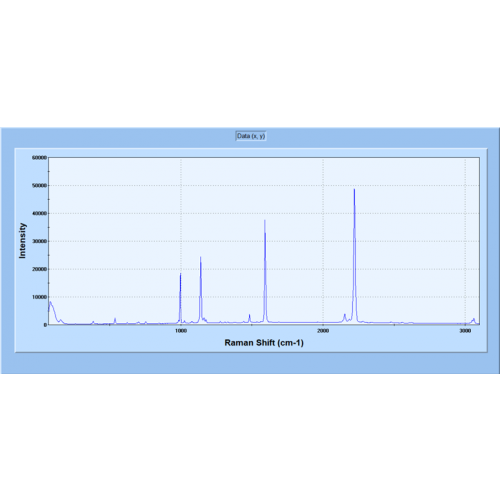
Raman Spectroscopy Principle
Raman spectroscopy belongs to the category of vibrational spectroscopy. The measurement principle is based on illuminating a sample with a fixed-wavelength laser and analyzing the frequency shift of scattered light caused by molecular bond vibrations, thereby identifying chemical bonding, molecular structure, and material composition.
The Raman analyzers provided by FST International (probe Raman analyzer for gas analysis) feature a highly stable laser source, a high-sensitivity CCD spectrometer, a portable laptop, and an insertion-type fiber optic probe. The system is suitable for solid, liquid, and gaseous samples and can be configured with different laser wavelengths, optical components, and sampling modules.
- Suitable for laboratory analysis or in-line process monitoring
- Supports corrosive gases and special process conditions
- DEMO testing service available with actual sample evaluation
Advantages of Raman Spectroscopy
- Non-destructive analysis without altering sample properties
- No sample preparation required; applicable to solids, liquids, and gases
- Localized analysis under a microscope (micro-Raman)
- Suitable for aqueous solutions and insensitive to water