
Research & Academia Applications|Thermal Analysis and Thermophysical Property Measurement for Materials R&D and Education
From ceramic fibers and bio-based plastics to nano-composites, new material development is at the core of technological innovation. In research and academic fields, thermal analysis and thermophysical measurements help scientists and engineers accurately determine key parameters such as specific heat, melting point, coefficient of thermal expansion, sintering behavior, and thermal conductivity. These data are essential tools for material design, fundamental research, and laboratory teaching.
Why Are Thermal Analysis and Thermophysical Measurements Important for Research and Academia?
More than two-thirds of technological innovations can be directly or indirectly traced to the development of new materials. Whether ceramic fibers, bio-polymers, lightweight alloys, or nano-structured composites, thermal behavior and thermophysical properties play a key role in material design, simulation, and real applications. In research and teaching laboratories, systematic thermal analysis enables the establishment of complete “thermal fingerprints” of materials and also serves as an excellent platform for education and training in thermal analysis techniques.
- Basic material properties: measurement of specific heat, melting point, glass transition temperature, and thermal expansion coefficient as input data for design and simulation.
- New material development: evaluation of heat transfer and phase transition behavior in composites, nanostructures, and multilayer films.
- Sintering and process research: observation of shrinkage, decomposition, and phase transitions to optimize heat treatment and process conditions.
- Interdisciplinary applications: support for research projects in automotive, aerospace, energy, electronics, and life sciences.
- Teaching and training: use of standard samples and typical tests (e.g., calcium chloride, calcium oxalate, copper fibers, steel foils) for laboratory courses.
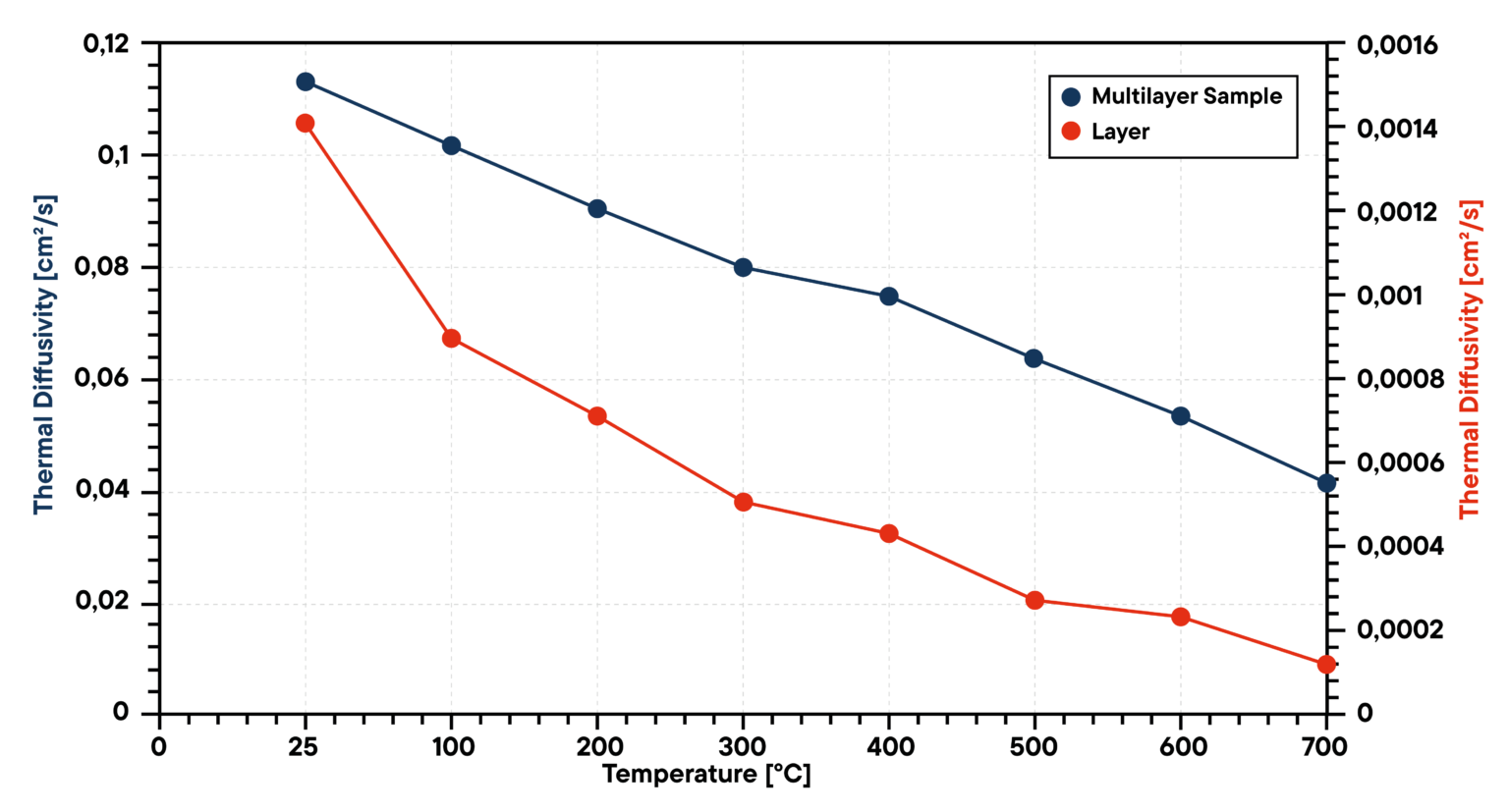
Case Study 1: Thermal Diffusivity and Thermal Conductivity of Multilayer Samples (LFA)
In thin films, multilayer structures, and composite materials, heat transfer often shows very different behavior in the in-plane and through-plane directions. Using laser flash analysis (LFA) with multilayer models, effective thermal diffusivity and thermal conductivity can be obtained for systems composed of coatings, adhesive layers, metal foils, and substrates. This is especially important for electronic packaging, thermal barrier coatings, and advanced composites.
Key analysis points:
- Multilayer modeling using known thickness and density combined with LFA data.
- Comparison of in-plane and through-plane heat transfer behavior.
- Temperature-dependent property analysis for thermal simulation and lifetime prediction.
Such measurements are well suited for academic papers and interdisciplinary research projects, especially in energy, electronics, and thin-film technologies.
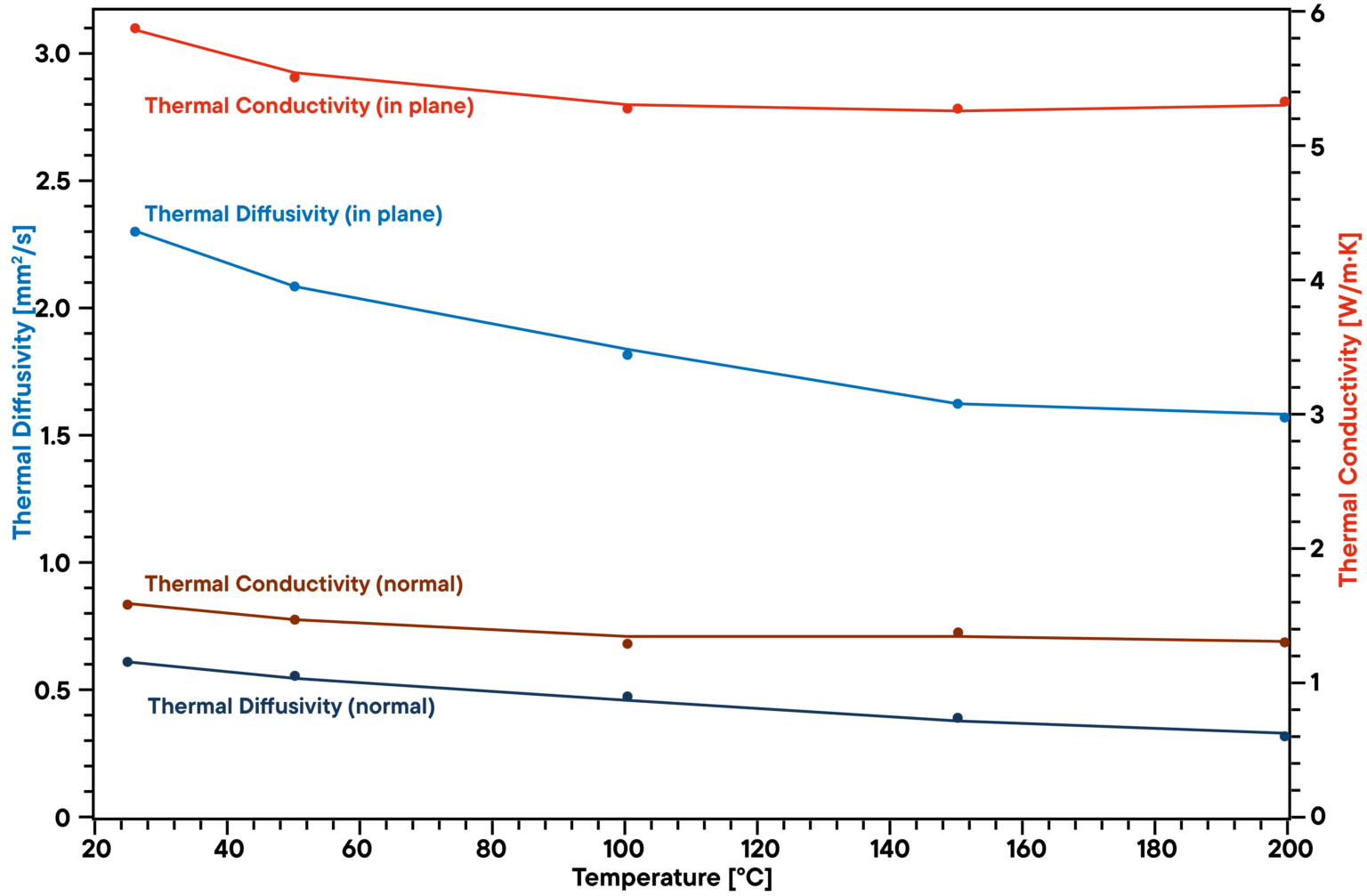
Case Study 2: Thermal Analysis of Fiber-Reinforced Composites and Copper Fibers
Fiber-reinforced composites, such as metal- or carbon-fiber reinforced polymers, combine low density with high stiffness and are widely studied in aerospace and automotive applications. By combining DSC, TGA, and thermal conductivity measurements, the thermal transitions of the matrix resin, fiber content, and interfacial heat transfer performance can be evaluated at the same time.
Key analysis points:
- DSC thermal transitions: glass transition, curing reactions, and possible post-curing behavior.
- TGA mass loss: estimation of fiber and inorganic filler content from residue.
- Thermal conductivity: comparison of different fiber types, orientations, and volume fractions.
These data support the development of composites with high thermal conductivity, high stiffness, or low thermal expansion and are valuable examples for advanced materials courses and research programs.
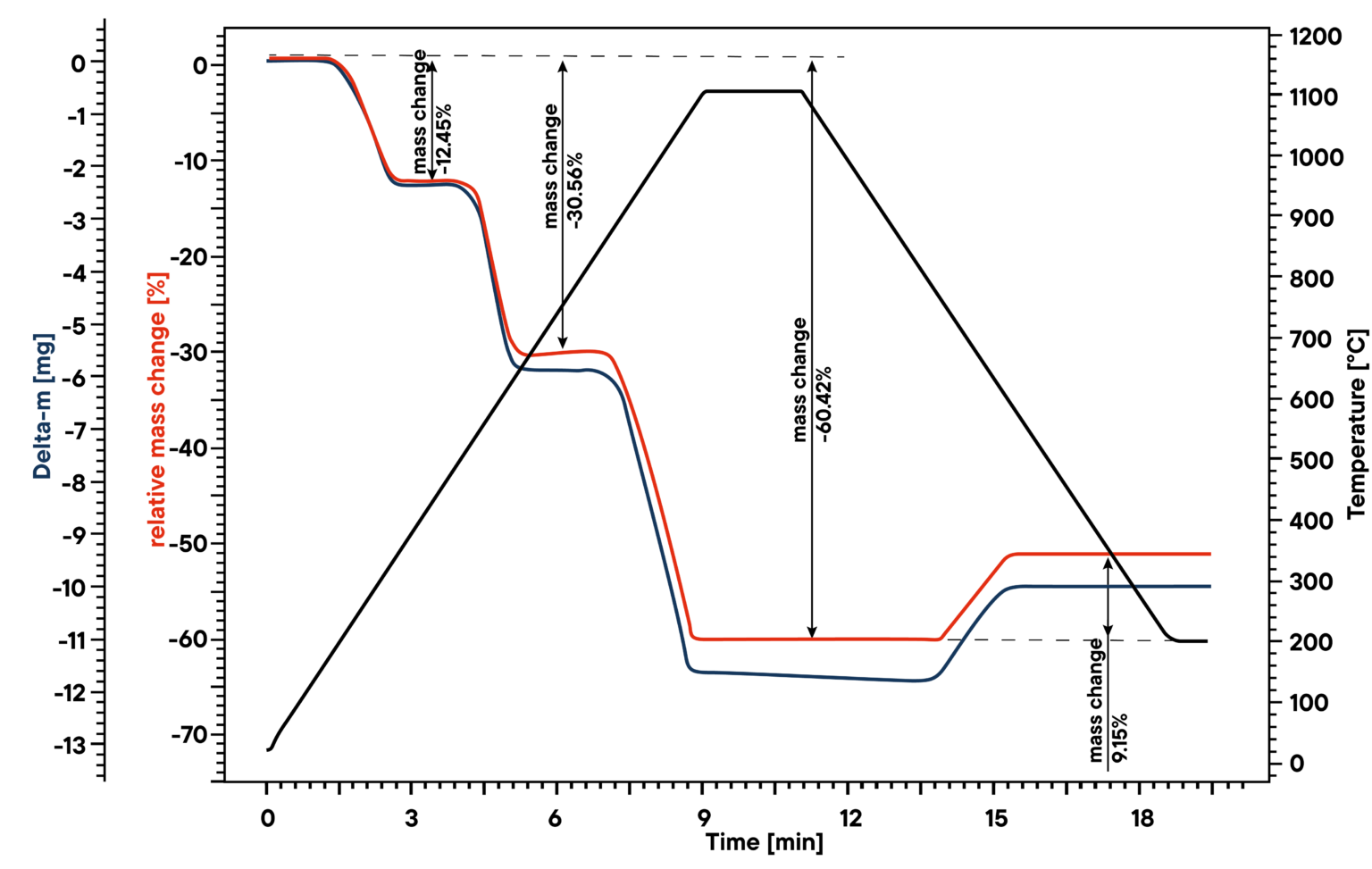
Case Study 3: Calcium Oxalate STA and Metal Foil Thermal Diffusivity Teaching Experiments
Calcium oxalate is a standard example in thermal analysis education. Its clear multi-step decomposition with endothermic and exothermic events makes it ideal for demonstrating STA (TGA + DSC). In addition, steel, copper, and graphite foils can be used in LFA experiments to measure in-plane and through-plane thermal diffusivity and conductivity for heat transfer and materials science courses.
Key analysis points:
- Calcium oxalate STA: interpretation of multi-step mass loss and corresponding heat flow signals.
- Metal foil LFA: comparison of thermal diffusivity and conductivity of steel, copper, graphite, and refractory materials.
- Teaching module design: standardized samples and methods for undergraduate and graduate laboratory courses.
These standardized and highly reproducible experiments effectively support practical training in thermal analysis and materials science education.
Common Thermal Analysis and Thermophysical Techniques for Research and Academia
- Differential Scanning Calorimetry (DSC): melting, glass transition, crystallization, and curing reactions.
- Simultaneous Thermal Analysis (STA: TGA + DSC): mass change and heat flow for multi-step decomposition studies.
- Dilatometry / TMA: thermal expansion coefficients and sintering shrinkage behavior.
- Laser Flash Analysis (LFA): thermal diffusivity and conductivity of solids, foils, and multilayer structures.
- Thermal conductivity and thermal resistance methods (HFM, transient methods).
- Specific heat capacity (Cp): basic thermodynamic data for simulation and energy balance analysis.
Based on research topics and teaching needs (polymers, metals, ceramics, composites, or thin films), we can help plan suitable measurement techniques and experimental modules, and provide sample testing and technical support for research proposals, publications, and laboratory course design.
Looking for Thermal or Electrical Property Evaluation Solutions?
We provide measurement services, technical consulting, and project collaboration to help improve your R&D efficiency and product reliability.
Allen Kuo|FST International|Email: Allen.kuo@fstintl.com.tw