
Ceramics & Glass Applications|Thermal Analysis and Thermophysical Property Measurements for Ceramics and Glass
From traditional tableware and architectural glass to high-performance technical ceramics and optical components, ceramics and glass are widely used in daily life as well as advanced industries. By applying thermal analysis and thermophysical property measurements, material behavior during sintering, cooling, and long-term service can be quantified in R&D and process stages, helping improve product reliability and process stability.
Why Do Ceramics and Glass Require Thermal Analysis and Thermophysical Property Measurements?
In real-world applications, ceramics and glass often experience high-temperature sintering, thermal cycling, mechanical stress, and chemical corrosion. With thermal analysis and thermophysical property measurements, stability and functional performance under different conditions can be evaluated in advance during material selection and design.
- Thermal expansion and dimensional stability: Measure the coefficient of thermal expansion (CTE) and phase transition temperatures to prevent cracking and residual stress caused by thermal mismatch in sealing or assembly.
- Thermal conductivity and specific heat: Understand heat transfer and heat storage capability to optimize thermal management for refractories, insulating glass, and electronic substrate materials.
- Sintering and firing behavior: Track shrinkage, binder burnout, and decomposition during heating to define an optimal firing profile and reduce energy consumption.
- Composition and purity control: With mass change (TGA) and heat flow signals, evaluate structural water, organics, and impurity levels to improve batch consistency.
- Electrical and structural properties: Combine with conductivity or impedance measurements to study conduction, dielectric, and ionic transport behavior of electronic ceramics and glass-ceramics.
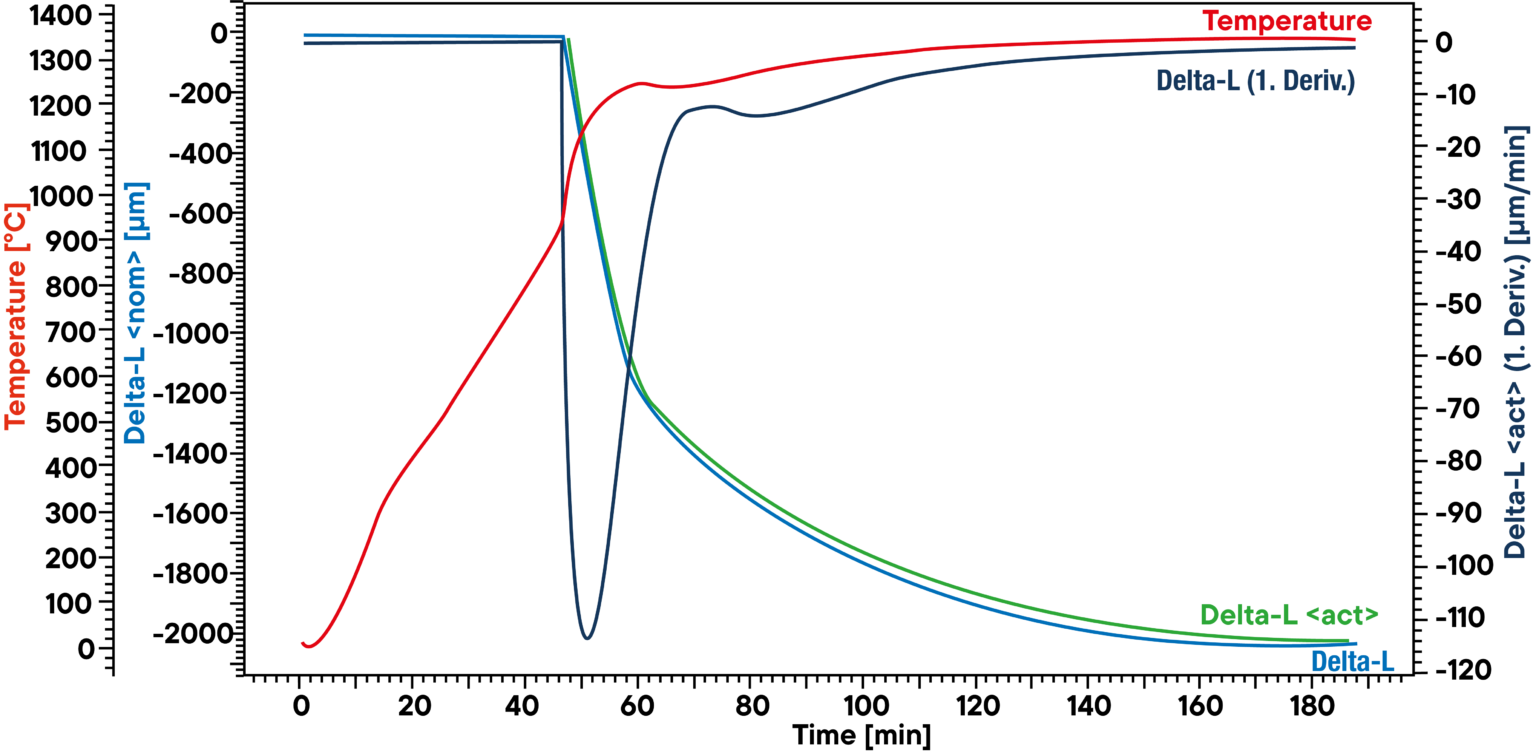
Case 1: Sintering Behavior and Dimensional Stability of High-Performance Ceramics (DIL / STA)
Technical ceramics (e.g., alumina, zirconia, and silicon carbide) are widely used in high-temperature structural parts, cutting tools, and electronic substrates. Their sintering profile and thermal expansion behavior directly affect final density, strength, and dimensional accuracy. With a dilatometer (DIL) and simultaneous thermal analysis (STA: TGA combined with DSC), the full evolution from pressed green bodies to high-temperature sintering can be characterized, including shrinkage and phase transitions.
Key measurement & interpretation points:
- Thermal expansion curve from room temperature to high temperature, and the shrinkage window during sintering.
- Impact of dehydration, debinding, and decomposition steps on mass and dimensional change.
- Optimization of sintering temperature, dwell time, and heating rate to balance densification, grain size control, and energy efficiency.
These insights support defining a “sintering process window” for technical ceramics, enabling scale-up and quality assurance.
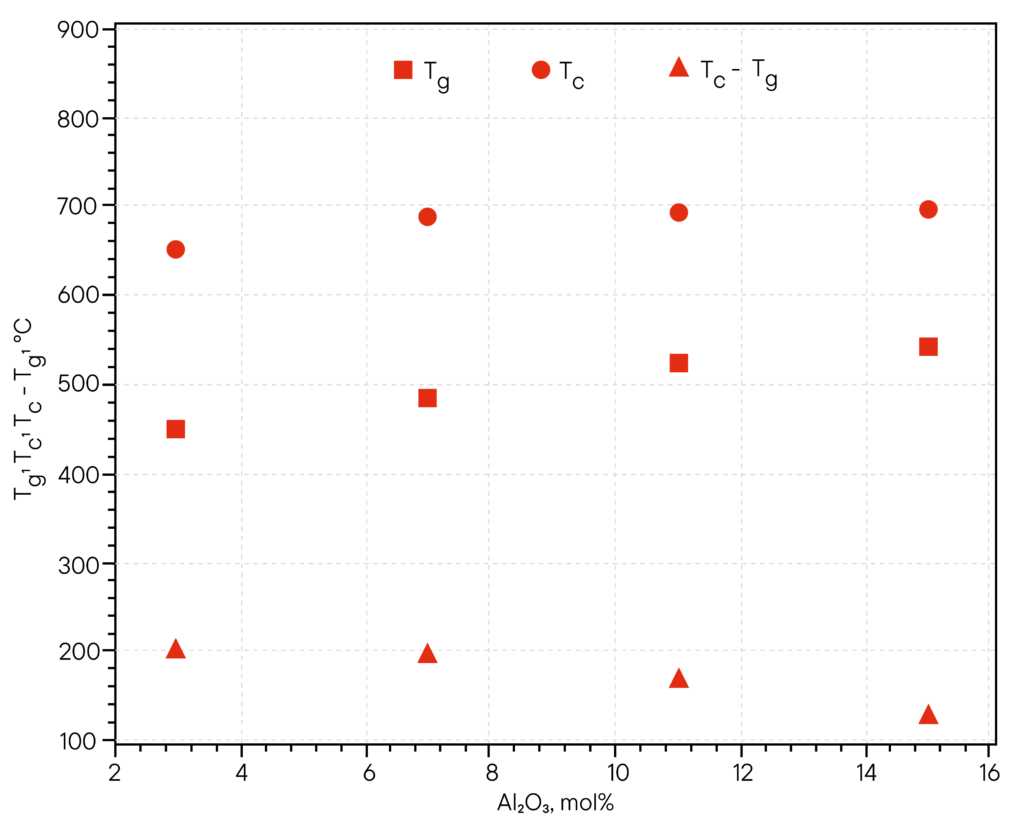
Case 2: Thermal Stability Assessment for Architectural and Solar Glass Coatings (DSC)
Low-emissivity glass and multi-layer functional coatings are widely adopted in modern buildings and solar applications to achieve both energy savings and weather resistance. If the glass or coating crystallizes or phase-separates under high temperature or long-term sunlight exposure, optical and mechanical performance may degrade. Differential scanning calorimetry (DSC) can measure the glass transition temperature (Tg) and exothermic crystallization behavior, providing key inputs for coating formulation and heat-treatment design.
Evaluation directions supported:
- Comparison of Tg, crystallization temperature, and melting behavior across different glass substrates and coating formulations.
- Influence of annealing or thermal cycling on coating stability.
- Long-term reliability assessment for solar glass, display panels, and energy-saving architectural glazing.
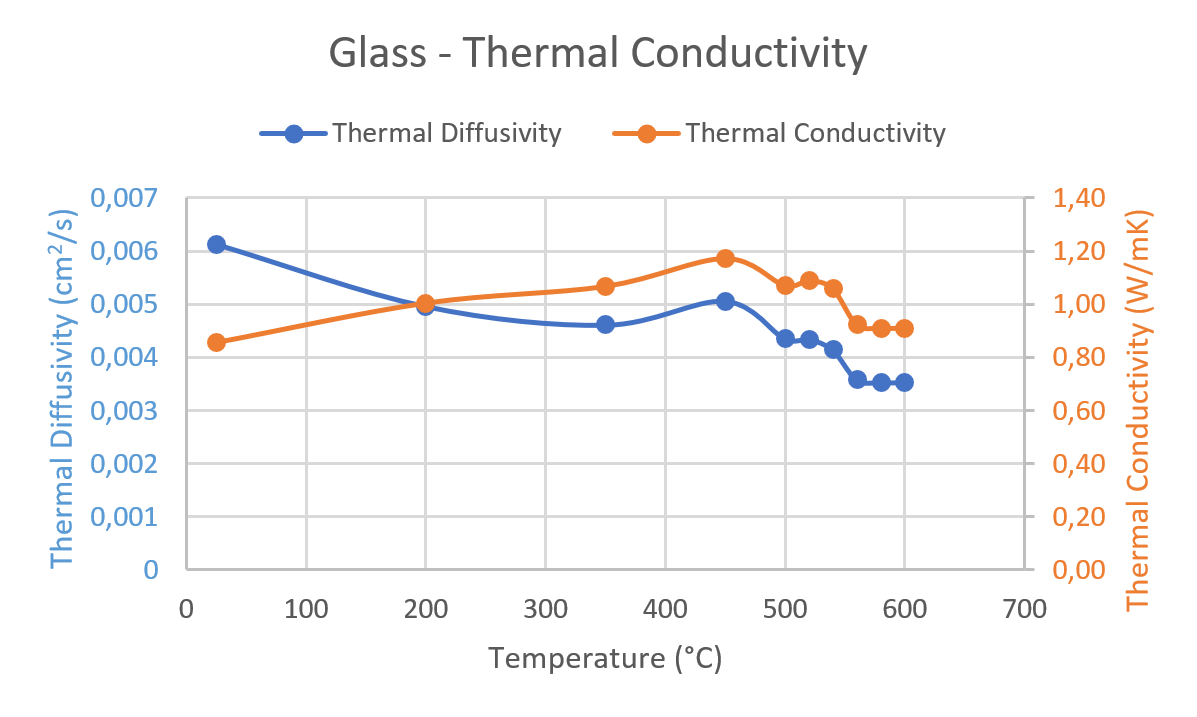
Case 3: Performance Development for Self-Cleaning Surfaces and BIPV-Integrated Glass (Thermal Analysis + Thermophysical Properties)
With the growth of smart buildings and green energy technologies, self-cleaning glass and building-integrated photovoltaics (BIPV) have become important material systems. Their surface layers and encapsulation structures must balance optical transmittance, weather resistance, and mechanical strength. A combined approach of thermal analysis and thermophysical property measurements supports development of functional glass systems with long lifetime and high efficiency.
Measurement and design focus:
- Use laser flash analysis (LFA) to evaluate thermal conductivity and specific heat of encapsulation glass and sealant layers, improving heat dissipation and temperature uniformity.
- Use a dilatometer to confirm thermal expansion matching among glass, ceramics, and metal frames, reducing warpage and fracture driven by thermal stress.
- Use DSC/TGA to track long-term stability of coatings and encapsulation materials under thermal aging and UV exposure.
Common Thermal Analysis and Thermophysical Measurement Techniques for Ceramics and Glass
- Thermal expansion (DIL / TMA): Measure CTE, sintering shrinkage, and phase transition temperatures for dimensional stability and sealing compatibility.
- Thermal conductivity and diffusivity (LFA, HFM, etc.): Evaluate heat transfer/insulation performance for refractories, insulating glass, and ceramic substrates.
- Differential scanning calorimetry (DSC): Measure glass transition, crystallization, and melting behavior to support glass formulation and heat-treatment design.
- Simultaneous thermal analysis (STA: TGA + DSC) and thermogravimetric analysis (TGA): Observe dehydration, decomposition, oxidation, and mass change to assess raw material purity and additive content.
- Conductivity and impedance analysis: Study temperature-dependent conduction mechanisms in electronic ceramics, glass-ceramics, and ionic conductors.
Based on your specific ceramics and glass application scenarios, we can help define appropriate methods and test conditions, and provide test trials and technical support to deliver reliable thermophysical data for R&D, quality control, and failure analysis.
Need a Thermophysical Property Evaluation Plan?
We provide testing services, technical consulting, and project collaboration to help improve R&D efficiency and product reliability.
Allen Kuo|FST International|Email: Allen.kuo@fstintl.com.tw