
Polymer Applications|Thermal Analysis & Thermophysical Property Measurements
From PE, PP, and PVC to engineering plastics and biodegradable polymers, polymeric materials are widely used in packaging, automotive components, electronic packaging, medical devices, and construction. Selecting the right polymer for a specific application requires understanding its melting temperature, glass transition temperature, crystallinity, thermal stability, and aging behavior. Through thermal analysis and thermophysical property measurements, a comprehensive thermal fingerprint of materials can be systematically established during R&D and quality control.
Why Do Polymers Require Thermal Analysis and Thermophysical Measurements?
Polymers can be broadly classified into thermoplastics, thermosets, and elastomers. During molding, welding, bonding, and long-term service, these materials undergo repeated heating and cooling cycles. By using techniques such as Differential Scanning Calorimetry (DSC), Thermogravimetric Analysis (TGA), Thermomechanical Analysis (TMA/DIL), and thermal conductivity measurements, key behaviors related to melting, crystallization, crosslinking, decomposition, and heat transfer can be fully characterized.
- Material selection and design: Identify suitable polymer grades and formulations based on melting point, glass transition temperature, and crystallinity.
- Processing parameters: Determine molding, extrusion, and hot-pressing temperatures and cooling conditions from melting and crystallization behavior.
- Thermal stability and aging: Evaluate decomposition and oxidation behavior under long-term or high-temperature service conditions.
- Thermal management and insulation: Design heat-dissipating or insulating systems using thermal conductivity and thermal resistance data.
- Dimensional stability and stress control: Measure thermal expansion and softening behavior to prevent warpage and stress concentration.
- Quality and batch consistency: Establish thermal analysis fingerprints for incoming inspection and process monitoring.
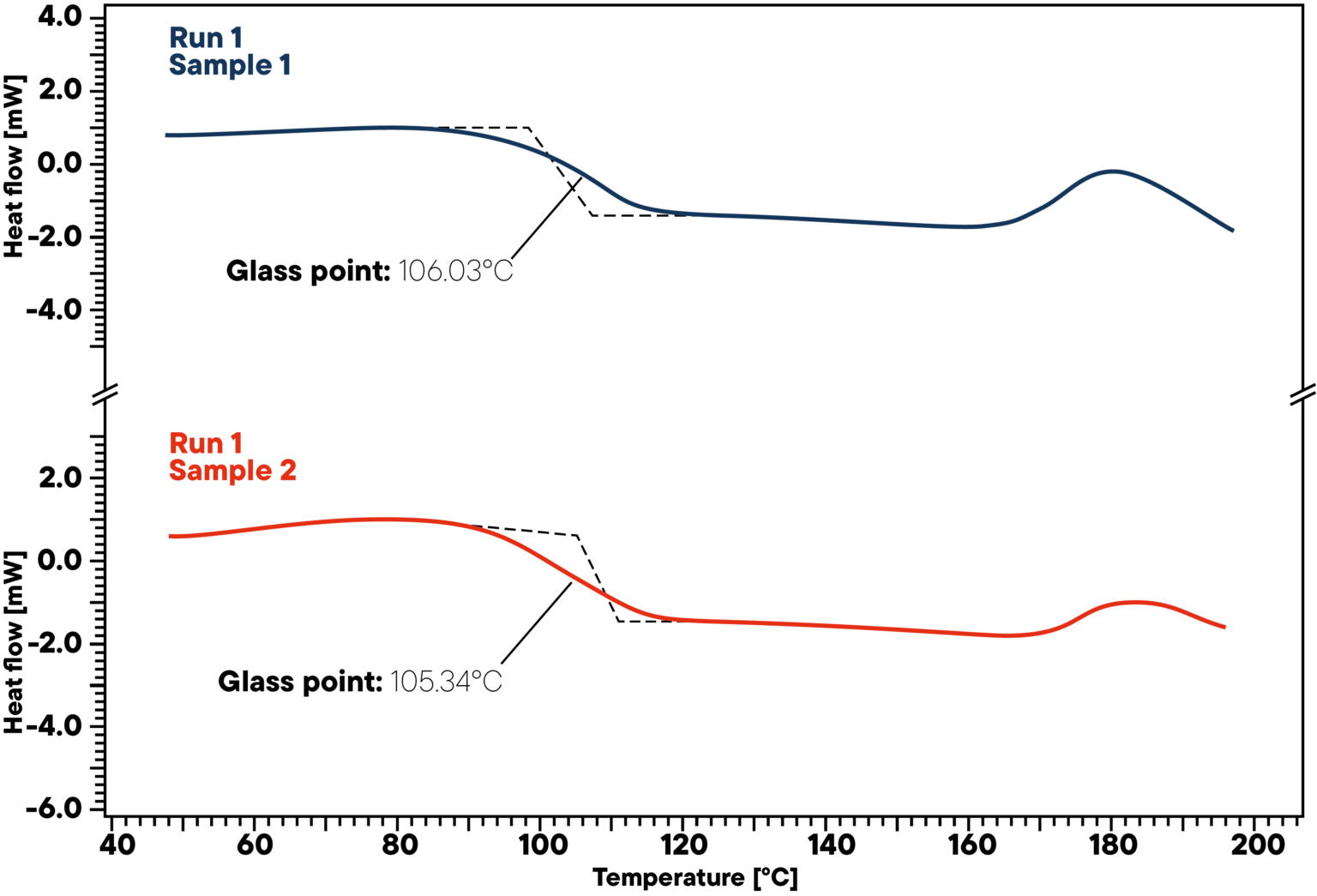
Case 1: Polymer Melting Behavior, Glass Transition, and Crystallinity (DSC)
For common thermoplastics such as PE, PP, PET, and ABS, melting temperature, glass transition temperature (Tg), and crystallinity directly affect mechanical strength, transparency, heat resistance, and dimensional stability. DSC measures these thermal transitions and estimates crystallinity by integrating melting enthalpy, supporting material selection and process optimization.
Key analysis points:
- Glass transition temperature (Tg): A critical indicator for low-temperature brittleness and service limits.
- Melting and crystallization peaks: Observation of cold crystallization, recrystallization, and double melting behavior.
- Crystallinity estimation: Comparison with theoretical enthalpy values to evaluate processing and annealing effects.
By applying different heating rates and thermal histories, DSC helps establish a “thermal transition map” for polymer grades.
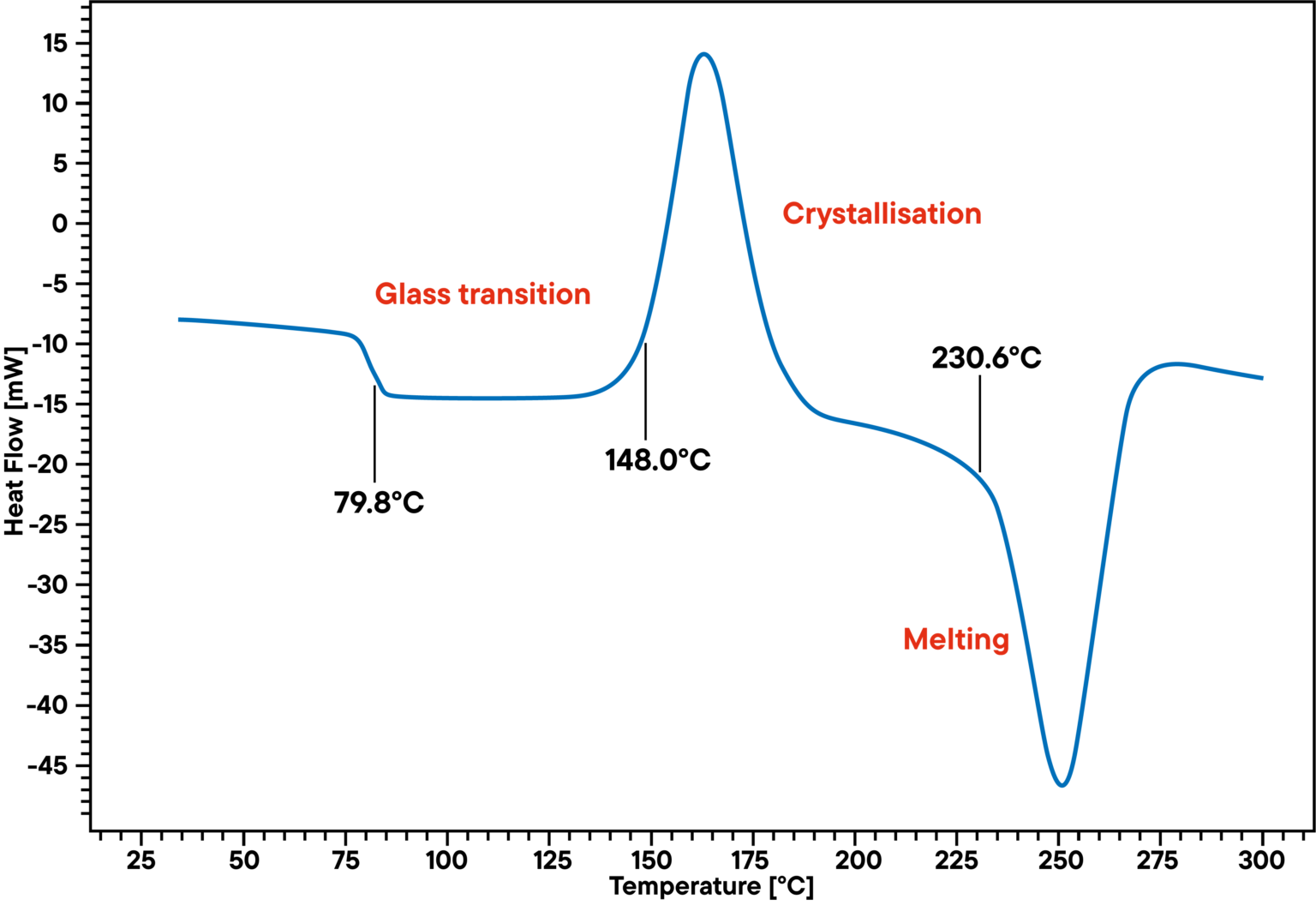
Case 2: Thermal Stability, Filler Content, and Oxidation Lifetime (TGA / DSC)
For polymers exposed to heat and oxygen over long periods, such as cables, outdoor components, and composite matrices, thermal stability and oxidation resistance are critical. TGA measures decomposition temperature and mass loss behavior, while DSC-based Oxidation Induction Time (OIT) evaluates antioxidant performance and lifetime.
Key analysis points:
- Decomposition onset and multi-step degradation mechanisms.
- Residual mass for estimation of inorganic filler or fiber content.
- Oxidation induction time (OIT) for comparing antioxidant formulations.
Combining TGA and DSC enables comprehensive evaluation of polymer reliability under real application conditions.
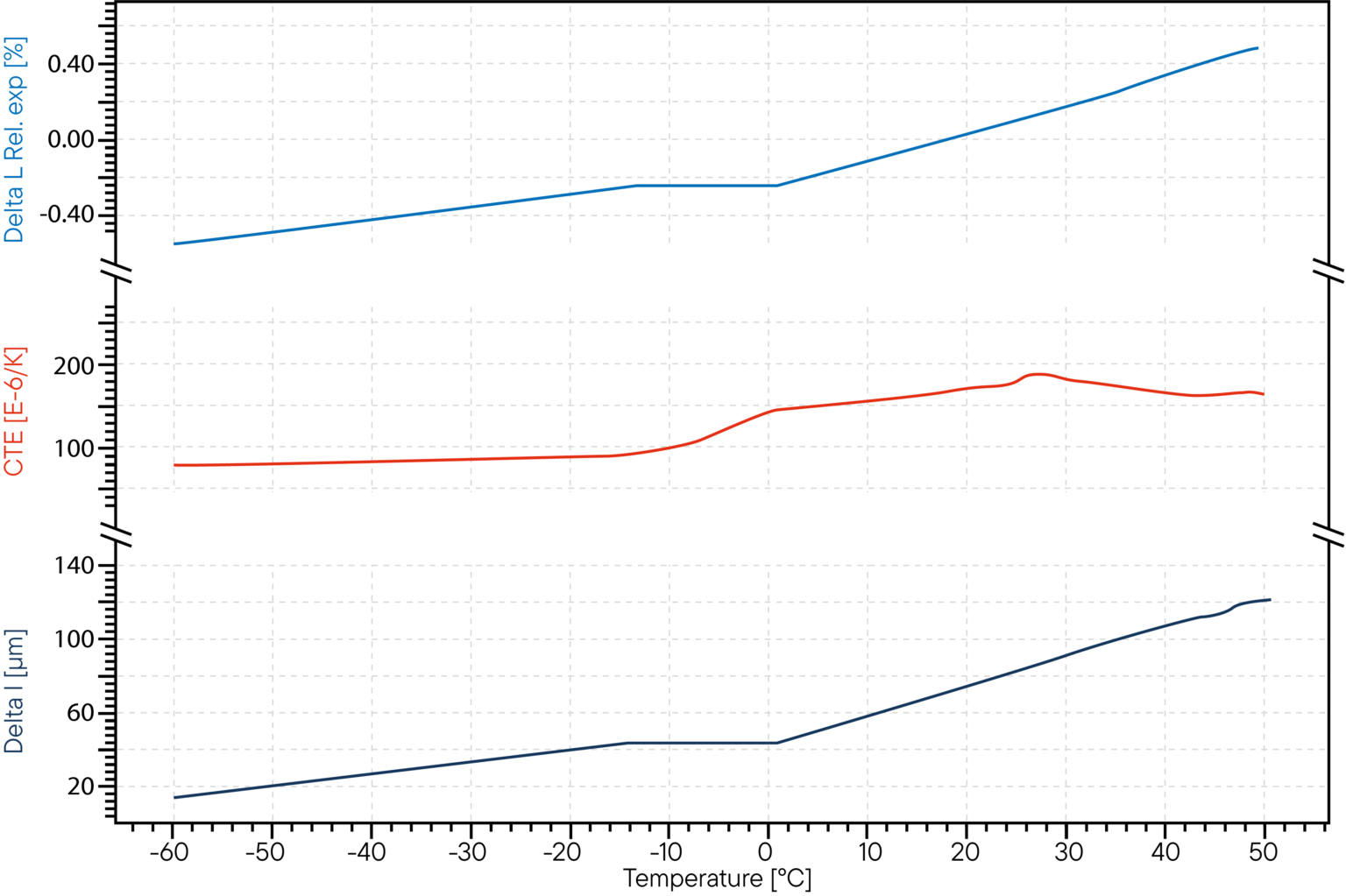
Case 3: Thermal Conductivity, Thermal Resistance, and Expansion of Polymers and Elastomers
In electronic packaging, thermal interface materials (TIMs), adhesives, and insulation systems, polymers may be designed for either high or low thermal conductivity. Steady-state and transient methods provide thermal conductivity and thermal resistance data, while DIL/TMA characterize thermal expansion of elastomers affecting sealing performance.
Key analysis points:
- Thermal conductivity comparison of neat polymers and filled composites.
- Thermal resistance and contact resistance under applied pressure.
- Thermal expansion behavior of elastomers for sealing reliability.
Integrating thermal conductivity and expansion data enables comprehensive thermal design models for polymer applications.
Common Thermal Analysis & Thermophysical Techniques for Polymers
- DSC: Melting point, Tg, crystallinity, curing, and OIT analysis.
- TGA / STA: Decomposition temperature, residue, and filler content.
- DIL / TMA: Thermal expansion, softening, and shrinkage behavior.
- Thermal conductivity and resistance (LFA, heat flow meter, transient methods).
- Specific heat capacity (Cp): Input for thermal design and process simulation.
Based on real polymer applications, we provide tailored measurement planning, sample testing services, and technical consultation to support material development, process optimization, and quality control.
Looking for Thermal or Electrical Property Evaluation Solutions?
We provide measurement services, technical consultation, and project-based collaboration to help improve your R&D efficiency and product reliability.
Allen Kuo | FST International | Email: Allen.kuo@fstintl.com.tw