
Energy Industry Applications|Thermal Analysis & Thermophysical Measurements for Energy Materials
Global energy transition and carbon-reduction targets are driving rapid development of fuels, energy storage, and energy conversion materials. With thermal analysis and thermophysical testing under controlled temperature and atmosphere, engineers can evaluate thermal stability, thermal conductivity, and phase-change behavior of fuels, photovoltaic materials, and high-temperature thermal storage media. These data are essential inputs for power-plant design, solar systems, and next-generation energy technologies.
Why does the energy industry need thermal analysis and thermophysical measurements?
For both conventional and renewable energy systems—combustion, power generation, thermal storage, and electrochemical conversion—the key is how materials behave across temperature changes. Thermal analysis and thermophysical testing provide reliable data under heating/cooling cycles and long-term operating conditions, enabling better design decisions and lower energy losses and equipment wear.
- Fuel thermophysical properties and combustion efficiency: Measure thermal conductivity, heat capacity, and thermal expansion to support burner and boiler design.
- R&D of new PV and energy-storage materials: Evaluate phase stability and thermal behavior to optimize processes and lifetime.
- High-temperature thermal storage and molten-salt systems: Understand thermal conductivity, heat capacity, and decomposition to improve efficiency and safety.
- Lifetime and reliability assessment: Simulate long-term operation with thermal cycling to predict deformation, fatigue, and degradation.
- CO₂ reduction and energy-saving design: Use accurate thermophysical data for heat balance and process simulation to reduce energy consumption and emissions.
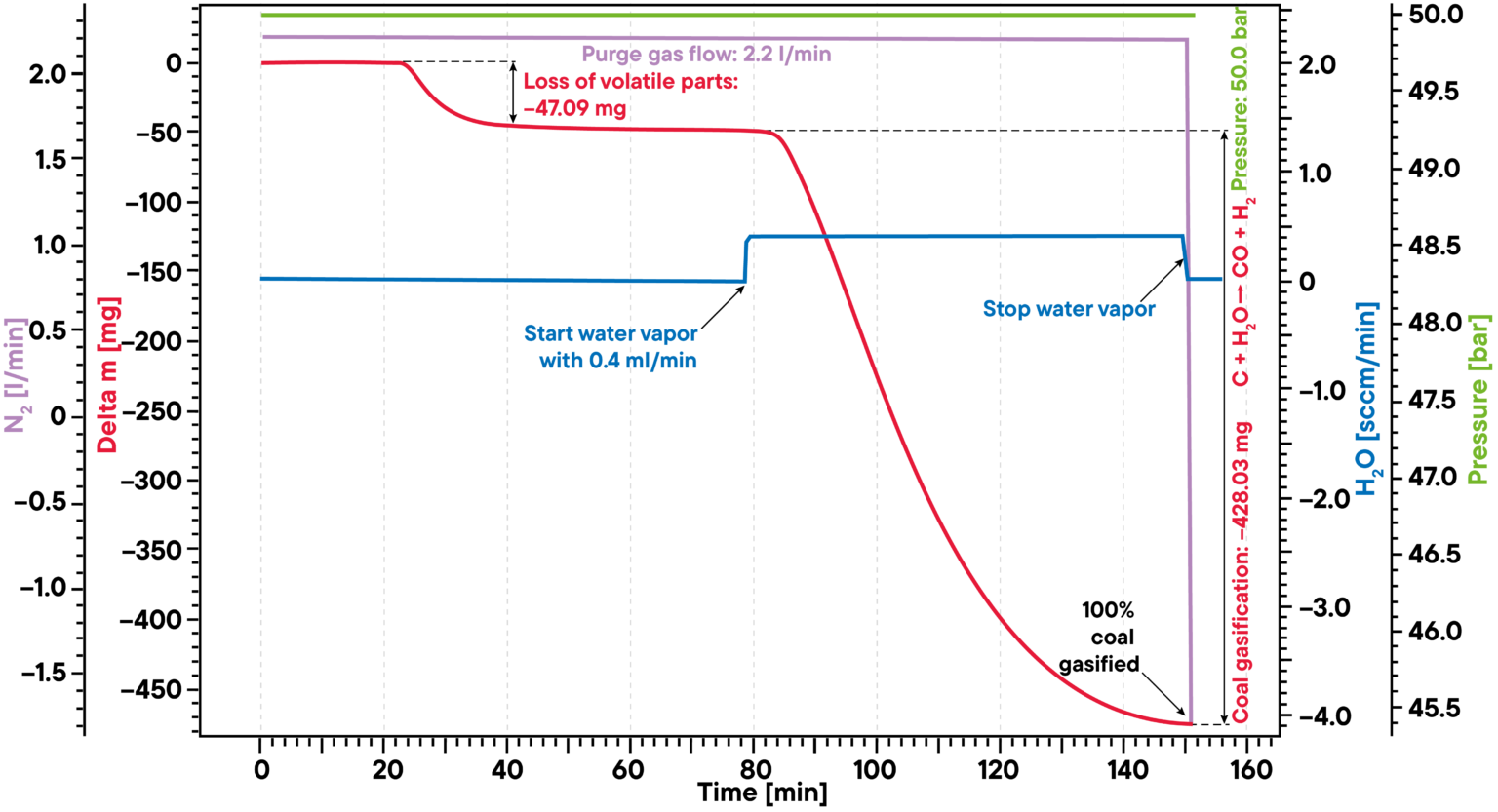
Case Study 1: Thermal Conductivity and Heat Capacity of Conventional Fuels
Conventional fuels such as coal, crude oil, and natural gas remain key energy sources for many power plants and industrial boilers. Understanding thermal conductivity, heat capacity, and thermal expansion supports accurate design of burners, heat exchangers, and high-temperature piping, helping improve combustion efficiency while reducing equipment wear.
Key measurement points:
- Thermal Conductivity: Impacts heat transfer through fuel beds and ash layers.
- Heat Capacity: A critical input for heat-balance calculations and start/stop strategies.
- Thermal Expansion: Closely related to thermal stress and lifetime of refractories and metallic structures.
With systematic thermophysical measurements, users can support fuel quality control and combustion optimization, improving generation efficiency while maintaining safety.
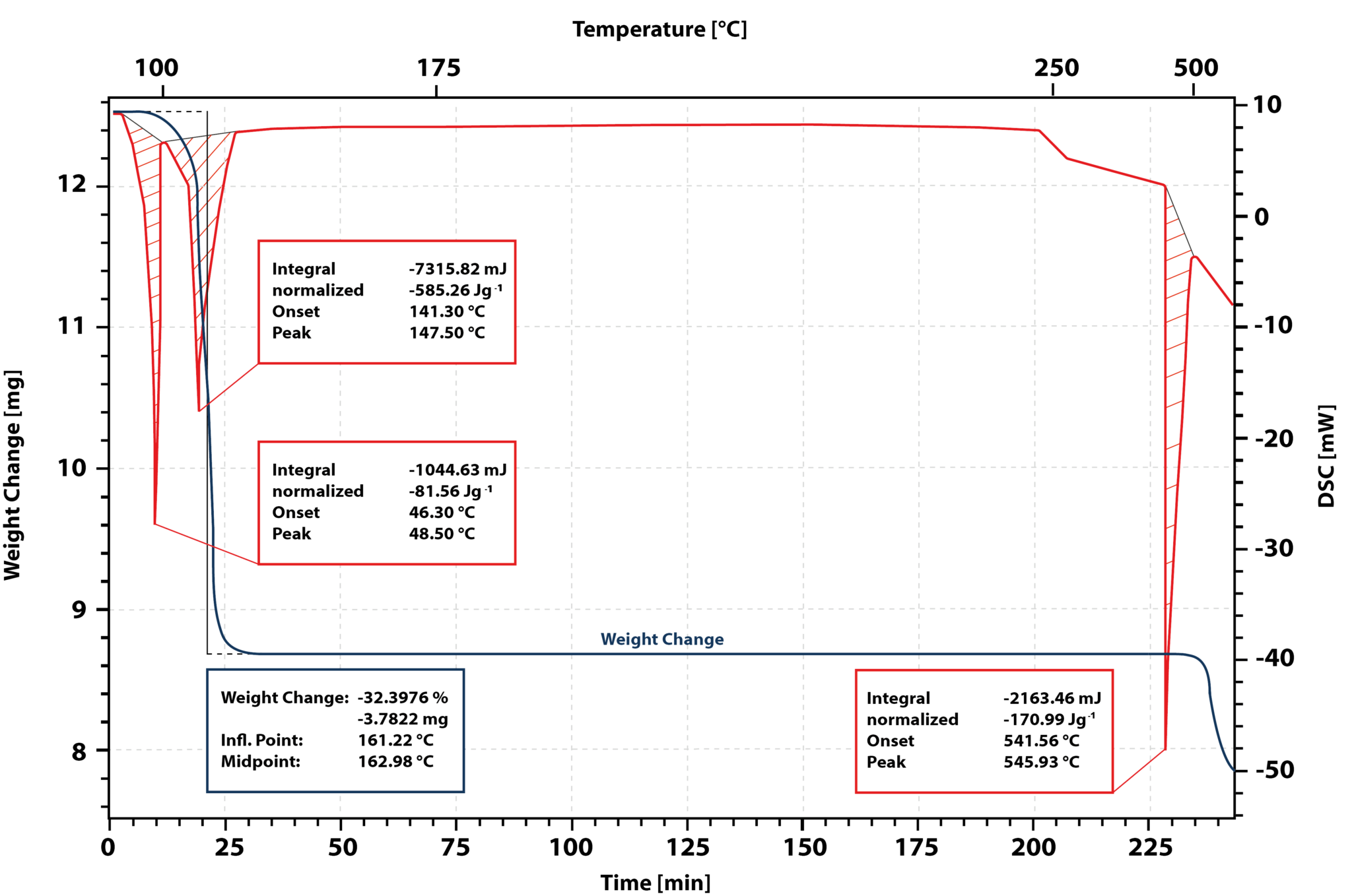
Case Study 2: Thermal Stability and Thin-Film Quality for Photovoltaic Materials
Beyond multi-crystalline silicon, next-generation PV technologies such as CIGS, CdTe, and perovskite solar cells are becoming strong candidates for higher efficiency and lower cost. Their thermal stability under high-temperature processing, day/night temperature cycling, and long-term outdoor exposure is a key factor for module lifetime and reliability.
Key measurement points:
- Thermal expansion matching between film and substrate to reduce warpage and cracking.
- Phase change and decomposition temperatures by DSC/TGA/STA signals to assess stability.
- Thermal conductivity and heat capacity as the basis for module thermal management.
These measurements enable early screening of PV materials with strong stability and provide quantitative inputs for packaging and heat-dissipation design.
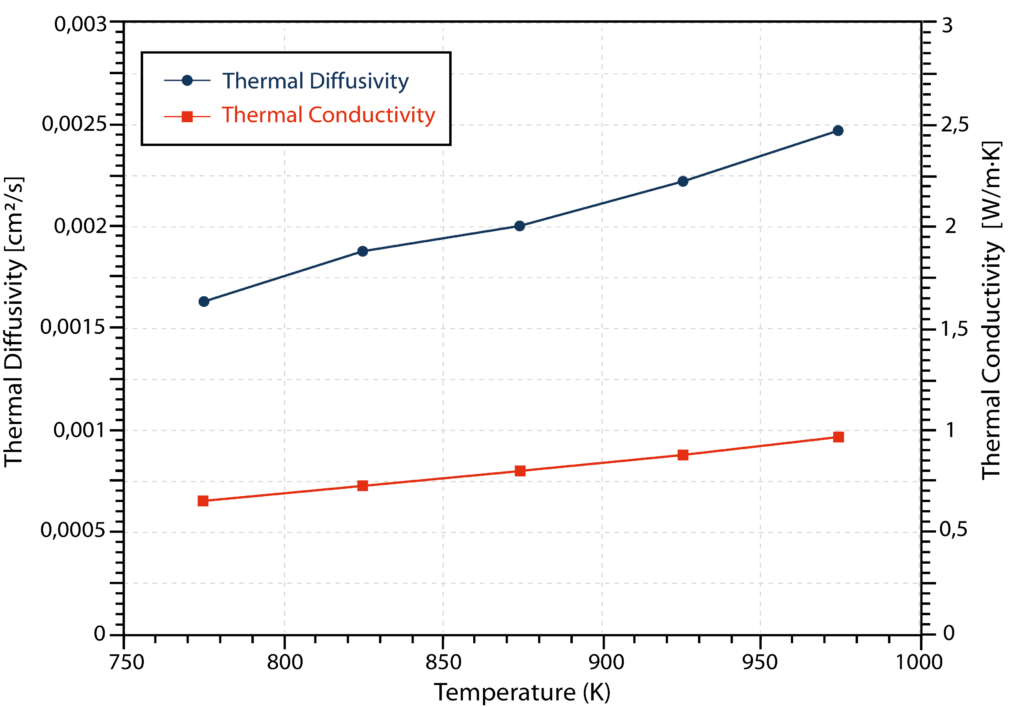
Case Study 3: Thermal Stability of Molten Salts for Thermal Storage and Advanced Energy Systems (LFA / STA)
Molten salts are widely used in concentrating solar power (CSP) plants and high-temperature thermal storage systems, and they are also considered important heat-transfer and storage media for future power technologies. For example, fluoride-salt systems such as FLiNaK offer strong heat-transfer performance and high-temperature stability, but decomposition behavior and compatibility with structural materials must be carefully evaluated.
Key measurement points:
- Thermal conductivity and thermal diffusivity: High-temperature measurements by Laser Flash Analysis (LFA) for storage tanks and heat exchanger design.
- Thermal stability and decomposition: Use STA (TGA + DSC) to observe mass changes and endo/exothermic events under different atmospheres.
- Long-term cycling reliability: Simulate real operation with thermal cycling to check for property degradation over time.
The results can be directly used for system design and lifetime prediction, reducing material risks and maintenance costs under high-temperature operation.
Common Thermal Analysis & Thermophysical Techniques for Energy Materials
- DSC: Measure phase transitions, melting/crystallization, reaction heat, and heat capacity (Cp).
- TGA / STA (TGA + DSC): Evaluate decomposition, oxidation/reduction behavior, and volatile losses for fuels and molten salts.
- Thermal conductivity / diffusivity (LFA, THB, HFM): Characterize heat transfer for solids, liquids, and molten systems for boilers and storage design.
- DIL / TMA: Determine CTE and high-temperature dimensional stability to prevent thermal-stress failures.
- Electrical & thermoelectric testing (e.g., Seebeck): For thermoelectric materials and specific conversion devices, to assess performance potential.
Need a Thermophysical or Electrical Property Evaluation Plan?
We provide testing services, technical consultation, and project collaboration to help you improve R&D efficiency and product reliability.
Allen Kuo|Email: Allen.kuo@fstintl.com.tw