
Power Generation / Energy Applications|Thermal Analysis of Fuels, Nuclear Energy, and Thermal Storage Materials
Against the backdrop of climate change and declining fossil fuel availability, improving energy and heat generation efficiency has become critical. In power generation and energy systems, understanding the thermophysical properties of fuels (such as coal, oil, and gas) and structural materials under high-temperature and high-pressure environments is essential for safety and efficiency enhancement. Thermal analysis and thermophysical property measurement techniques support process optimization, material design, and reliability assessment.
Why Do Power Generation / Energy Applications Require Thermal Analysis and Thermophysical Property Measurements?
In nuclear power, fuel-based power generation, and renewable energy systems, materials are often exposed to extreme temperatures, pressures, and corrosive environments. To build reliable energy systems, it is essential to understand the thermal conductivity, thermal expansion, decomposition reactions, and stability of fuels, structural materials, and molten salt thermal storage media under high-temperature and high-pressure conditions. Thermal analysis techniques provide these critical data to support system design, material selection, and life-cycle evaluation.
- Fuel thermophysical properties: Heat transfer behavior of coal, oil, gas fuels, and their ash residues in combustion and heat exchange systems.
- Nuclear material safety: Thermal expansion, thermal conductivity, and decomposition behavior of materials under high-pressure and high-temperature environments are key indicators for safety design.
- Renewable energy and storage media: Thermal conductivity and thermal stability of molten salts used in concentrated solar power plants and nuclear reactors.
- Thermal management and heat dissipation design: Establishment of heat transfer parameters for high-thermal-conductivity materials or low-thermal-conductivity insulation materials to reduce energy consumption and heat loss.
- Process reliability: Understanding material thermal behavior in electrolysis, synthetic fuel production, and thermal storage processes helps improve system reliability and efficiency.
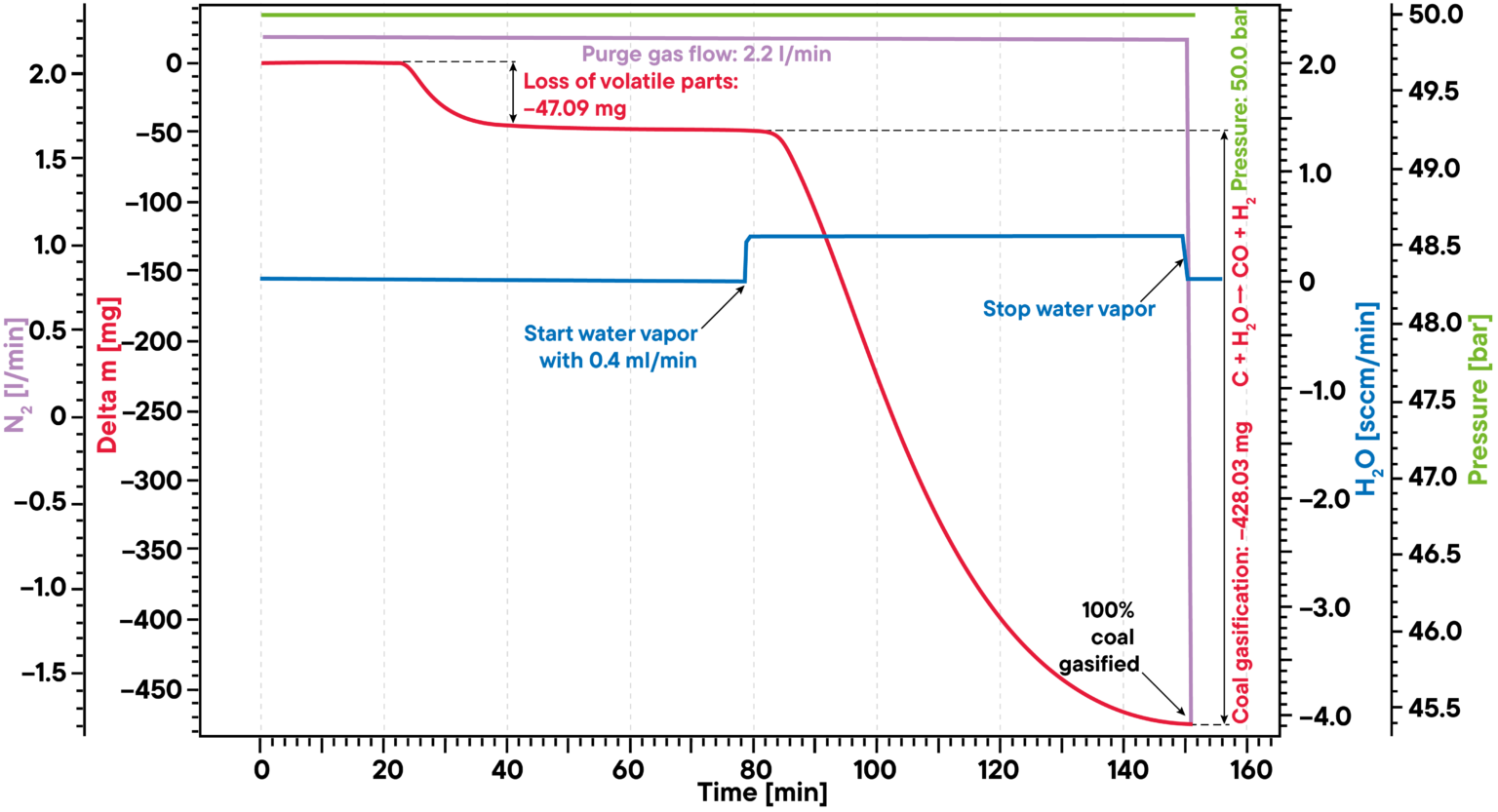
Application Case 1: Measurement of Thermal Conductivity and Decomposition Behavior of Coal, Oil, and Natural Gas Fuels
Fuels and combustion by-products (such as ash) play a critical role in thermal power generation systems. By combining thermogravimetric analysis (TGA) with thermal conductivity measurements, fuel composition, volatile content, ash content, and heat transfer performance can be characterized, supporting combustion design, equipment maintenance, and efficiency improvement.
Measurement and analysis focus:
- Mass loss curves: Observation of volatile release and ash formation during heating.
- Thermal conductivity measurement: Evaluation of heat transfer efficiency of fuel beds or ash layers under high-temperature conditions.
- Linkage to equipment design: Providing thermophysical property inputs for burners, heat exchangers, and ash handling systems.
These data support optimization of combustion conditions, reduction of heat loss and equipment wear, and enhancement of overall thermal efficiency and operational reliability of energy systems.
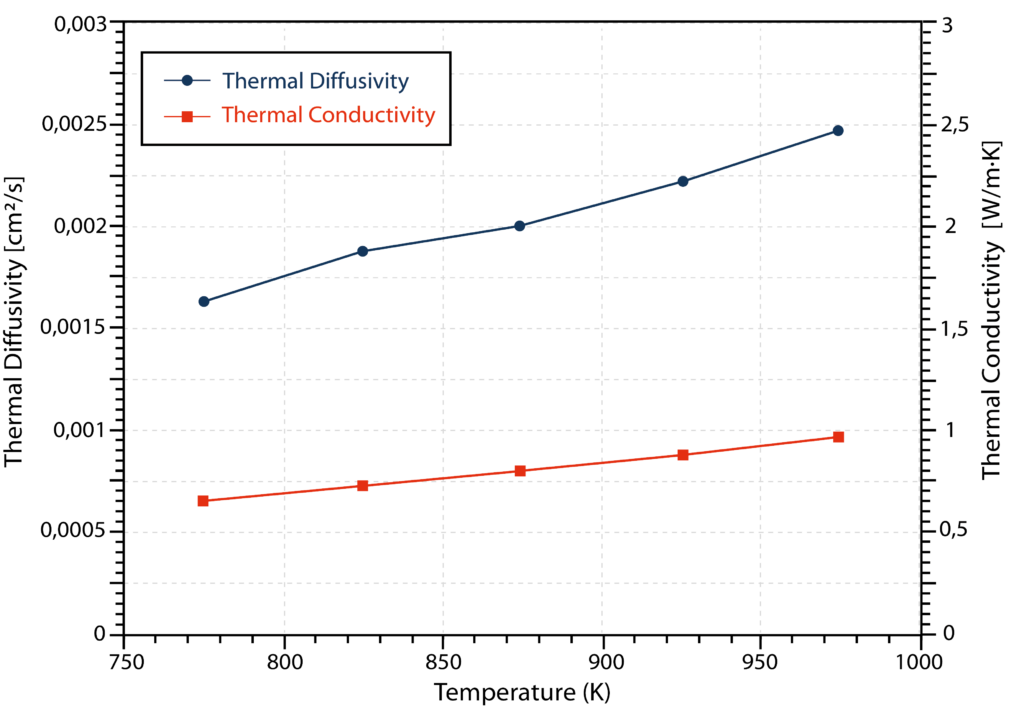
Application Case 2: Thermal Expansion, Thermal Conductivity, and Decomposition Analysis of Materials for Nuclear Energy and High-Temperature Thermal Storage Systems
In nuclear power and centralized thermal storage systems, materials such as molten salts, structural steels, and ceramic protective layers must withstand extreme temperatures and radiation environments. Using laser flash analysis (LFA), dilatometers (DIL), and simultaneous thermal analysis (STA), thermophysical properties and stability behavior of these materials under high-temperature and high-pressure conditions can be measured.
Measurement and analysis focus:
- Coefficient of thermal expansion: Comparison of thermal expansion differences among materials affected by radiation or corrosion to prevent thermal stress and cracking.
- Thermal conductivity variation: Temperature-dependent changes in thermal conductivity influencing the design of heat exchange modules and cooling systems.
- Decomposition or oxidation behavior: Evaluation of mass and heat flow curves under high-temperature atmospheres (such as helium, pure oxygen, or radiation environments) using STA.
These thermophysical data support the design of safe and reliable high-temperature thermal storage devices, reactor wall materials, and heat exchange structures, enabling long-term operation of nuclear and large-scale energy systems.
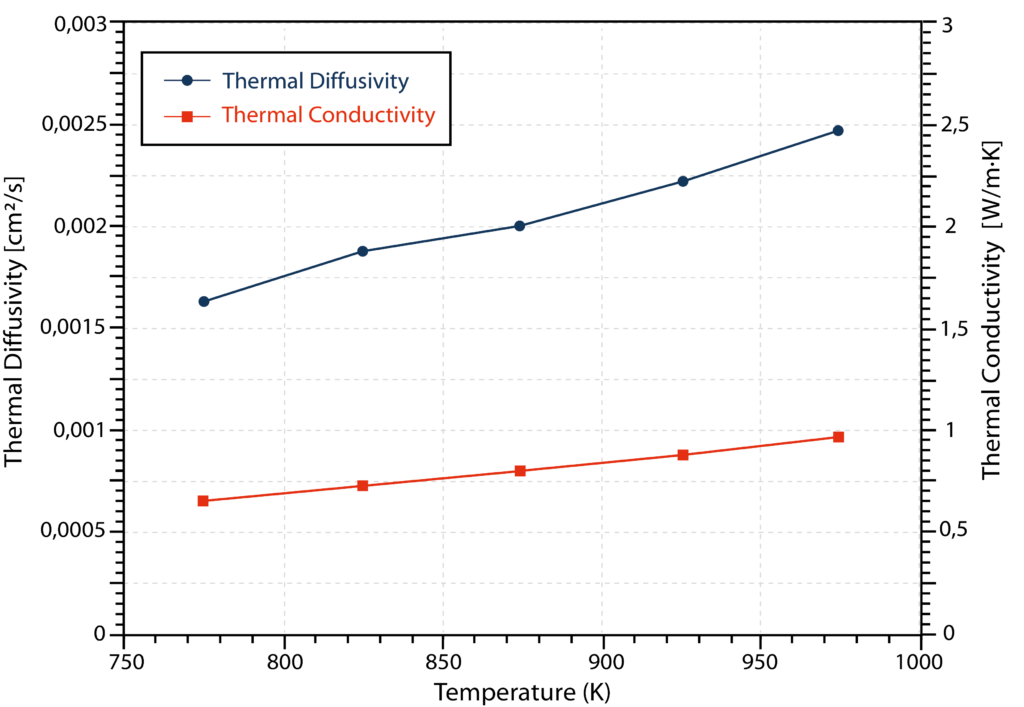
Application Case 3: Thermal Conductivity and Thermal Resistance Design for Renewable Energy Systems and Thermal Management Materials
In solar thermal power, wind energy, and thermal storage systems, thermal management materials such as molten salts, heat exchange tubes, thermal interface fillers, and insulation materials are critical. Thermal conductivity measurement and thermal resistance analysis support the design of low-heat-loss, high-efficiency renewable energy systems and thermal storage equipment.
Measurement and analysis focus:
- Thermal conductivity and thermal impedance: Determination of heat transfer parameters of molten salts, thermal interface materials, and heat dissipation modules under high- and low-temperature conditions.
- Interfacial thermal resistance: Evaluation of contact thermal resistance between thermal interface materials and metal tubes or heat spreaders for system modeling and design.
- Material degradation and cycling effects: Observation of thermophysical property changes under high-temperature cycling to ensure long-term reliability.
These measurement results enable energy system engineers to more accurately predict temperature distribution, heat loss, and heat dissipation efficiency during the design stage, improving overall system performance.
Overview of Common Thermal Analysis and Thermophysical Property Measurement Techniques for Power Generation / Energy Materials
- Laser flash analysis (LFA): Measurement of thermal diffusivity and calculation of thermal conductivity for high-temperature materials, suitable for molten salts, high-temperature alloys, and heat exchange materials.
- Dilatometry (DIL) and linear coefficient of thermal expansion: Evaluation of dimensional changes and compatibility of components under high-temperature and high-pressure conditions.
- Simultaneous thermal analysis (STA: TGA + DSC): Assessment of mass changes and exothermic/endothermic behavior of fuels, molten salts, catalysts, and materials under high-pressure atmospheres.
- Thermal conductivity / thermal resistance measurement: Steady-state or transient methods for thermal management design in high-power or high-heat-flux systems.
- Interfacial thermal resistance and thermal contact: Optimization of thermal performance for thermal modules, thermal storage interfaces, and burner structural components.
Based on specific application scenarios in the power generation and energy industry (thermal power generation, nuclear energy, thermal storage systems, fuels, heat exchange, and thermal management materials), we assist in planning appropriate measurement techniques and test conditions, and provide feasibility testing and technical support services to deliver critical data for system design, material selection, and reliability assessment.
Do You Need Material Thermophysical Property Evaluation Solutions?
We provide measurement services, technical consulting, and project collaboration to help you improve R&D efficiency and product reliability.
Allen Kuo|FST International|Email: Allen.kuo@fstintl.com.tw