
Semiconductors & Electronics Applications|Thermal Management and Material Characterization for Chips and Electronic Modules
As the performance and functionality of electronic products continue to increase, the waste heat generated by components has also risen significantly. Without proper thermal management design, not only will computing performance degrade, but component lifetime will be shortened and energy efficiency reduced. Through systematic thermal analysis and thermophysical property measurements, the behavior of chips, packaging materials, and thermal interface materials can be understood in advance during design, process, and quality control stages, supporting the development of highly reliable, high-power-density, and more compact electronic products.
Why Do Semiconductors and Electronics Require Thermal Analysis and Thermophysical Property Measurements?
Modern semiconductor materials such as silicon (Si), germanium (Ge), gallium arsenide (GaAs), bismuth telluride (Bi2Te3), and cadmium sulfide (CdS) have become the core of electronic products including computers, displays, smartphones, and solid-state lighting. During actual operation, these materials and related electronic components are subjected to complex thermal loads and electro-thermal coupling effects. Therefore, thermal analysis and thermophysical property measurements are required to comprehensively understand their thermal conductivity, thermal expansion, electrical properties, and reliability.
With modern thermal analysis and electrical transport measurement techniques, quantitative answers can be provided for the following key issues:
- Chip and package reliability: Under what thermal cycling or temperature stress conditions may chips or solder joints develop cracks, warpage, or failure?
- Heat conduction paths and material selection: Are the thermal conductivity and thermal resistance of silicon chips, substrates, solders, adhesive layers, and packaging materials sufficient to effectively dissipate heat?
- Sensor performance: Do temperature sensors and power devices maintain stable and predictable output under high temperatures or rapid temperature changes?
- Adhesive and package curing degree: Have adhesive systems and encapsulation resins been fully cured to avoid long-term drift or insufficient mechanical strength?
- Process and environmental control: Are ion implantation profiles and volatile organic compound (VOC) contamination levels in cleanrooms within controllable limits?
Common techniques include differential scanning calorimetry (DSC), thermogravimetric analysis (TGA), thermomechanical analysis (TMA / DIL), laser flash analysis (LFA), transient thermal conductivity measurement (THB), thermal interface material testing (TIM-Tester), as well as electrical transport analysis platforms such as Seebeck, resistivity, and Hall measurements, providing comprehensive thermal and electrical characterization for semiconductors and electronic components.
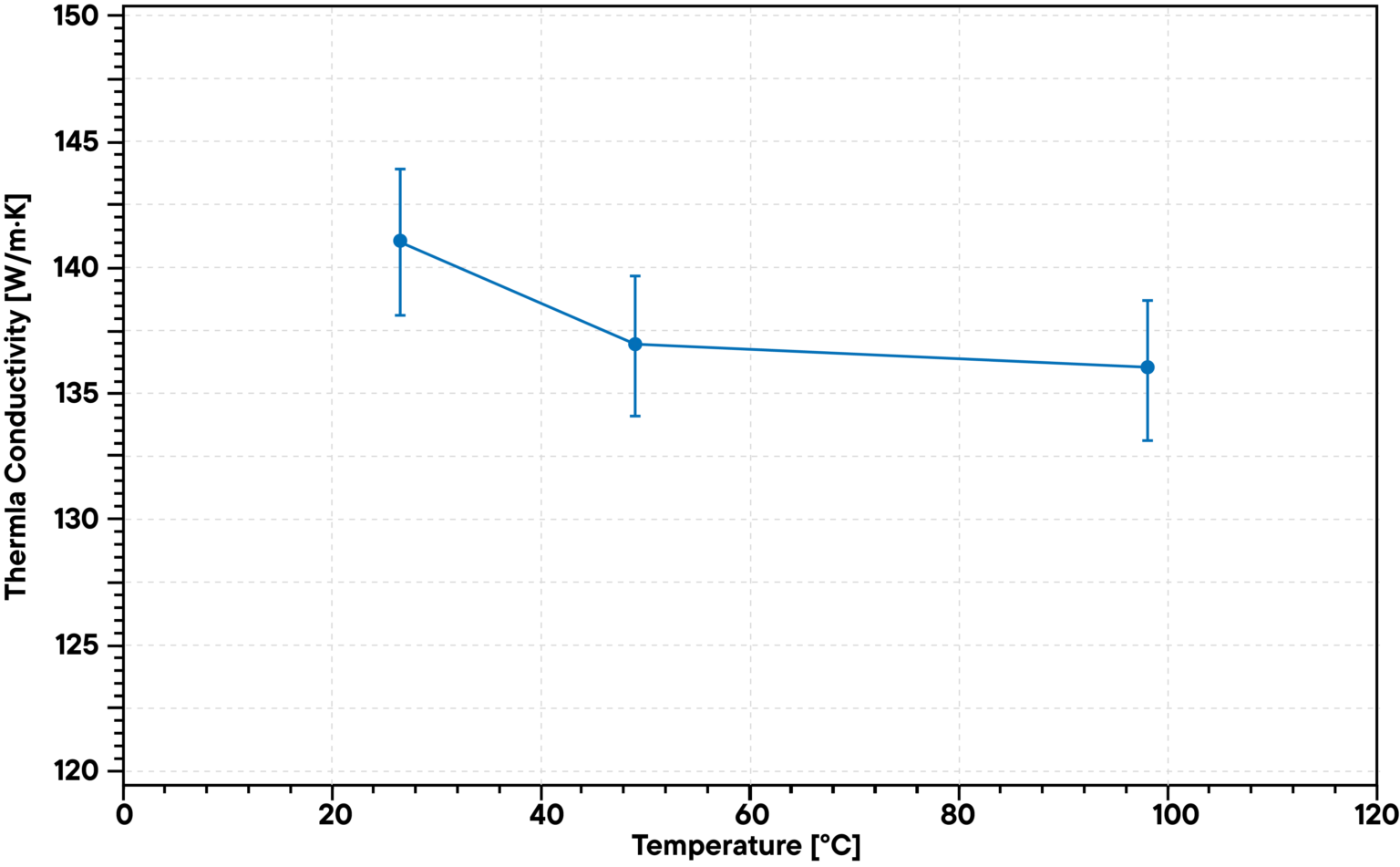
Application Case 1: Thermal Conductivity and Heat Storage Capacity of Power Modules and Phase Change Materials (THB / Thermal Conductivity Measurement)
In power supplies, servers, electric vehicle inverters, and power modules, phase change materials (PCM) or specialized thermal greases are often used to buffer transient heat peaks and maintain component temperatures within safe limits. Using thermal conductivity measurement techniques such as transient hot bridge (THB), the thermal conductivity, specific heat, and thermal behavior during phase transitions of PCM or thermal interface materials can be evaluated at different temperatures, supporting optimized thermal design.
Measurement and analysis focus:
- Thermal conductivity and thermal resistance: Measurement of thermal conductivity and equivalent thermal resistance of phase change materials, thermal greases, and insulation pads over the operating temperature range.
- Phase transition range and heat storage capacity: Evaluation of phase transition intervals and heat absorption capacity through temperature-dependent curves and specific heat variation.
- Long-term stability: Comparison of thermophysical property changes before and after thermal cycling as a basis for reliability and lifetime estimation.
These data help power module and thermal solution manufacturers achieve optimal material selection and stack design, balancing thermal performance and mechanical reliability.
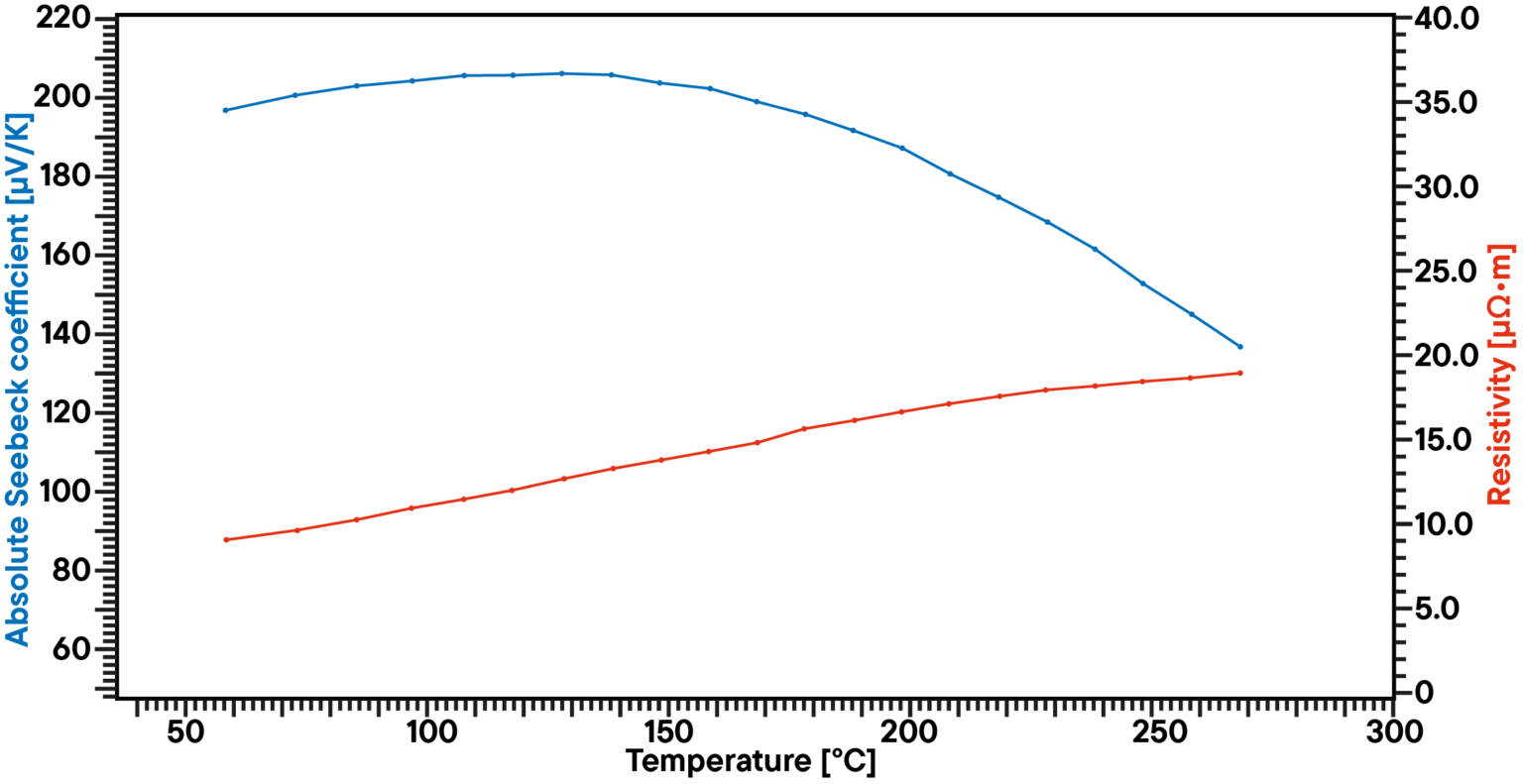
Application Case 2: Thermoelectric Performance of Thermoelectric Materials and Thin-Film Structures (Seebeck / Resistivity / ZT)
Thermoelectric materials such as silicon–germanium alloys (SiGe), bismuth telluride (Bi2Te3), and common alloys (e.g., Constantan) are widely used in temperature sensing, thermoelectric cooling, and waste heat recovery. Using thermoelectric property measurement platforms, Seebeck coefficient, electrical conductivity, and temperature dependence can be obtained simultaneously, enabling estimation of the thermoelectric figure of merit ZT. With thin-film-specific measurement techniques, thin-layer structures in microelectronic or MEMS devices can also be evaluated.
Measurement and analysis focus:
- Seebeck coefficient: Evaluation of thermoelectric voltage output under different temperatures and doping conditions.
- Resistivity and electrical conductivity: Measurement of temperature-dependent electrical transport behavior to analyze carrier concentration and mobility trends.
- ZT and material comparison: Estimation of ZT values by combining thermal conductivity and specific heat data, and comparison across different compositions or process conditions.
These measurement results support the development of next-generation thermoelectric modules, temperature sensors, and high-stability reference materials, and are also well suited for systematic academic research on thermoelectric properties.
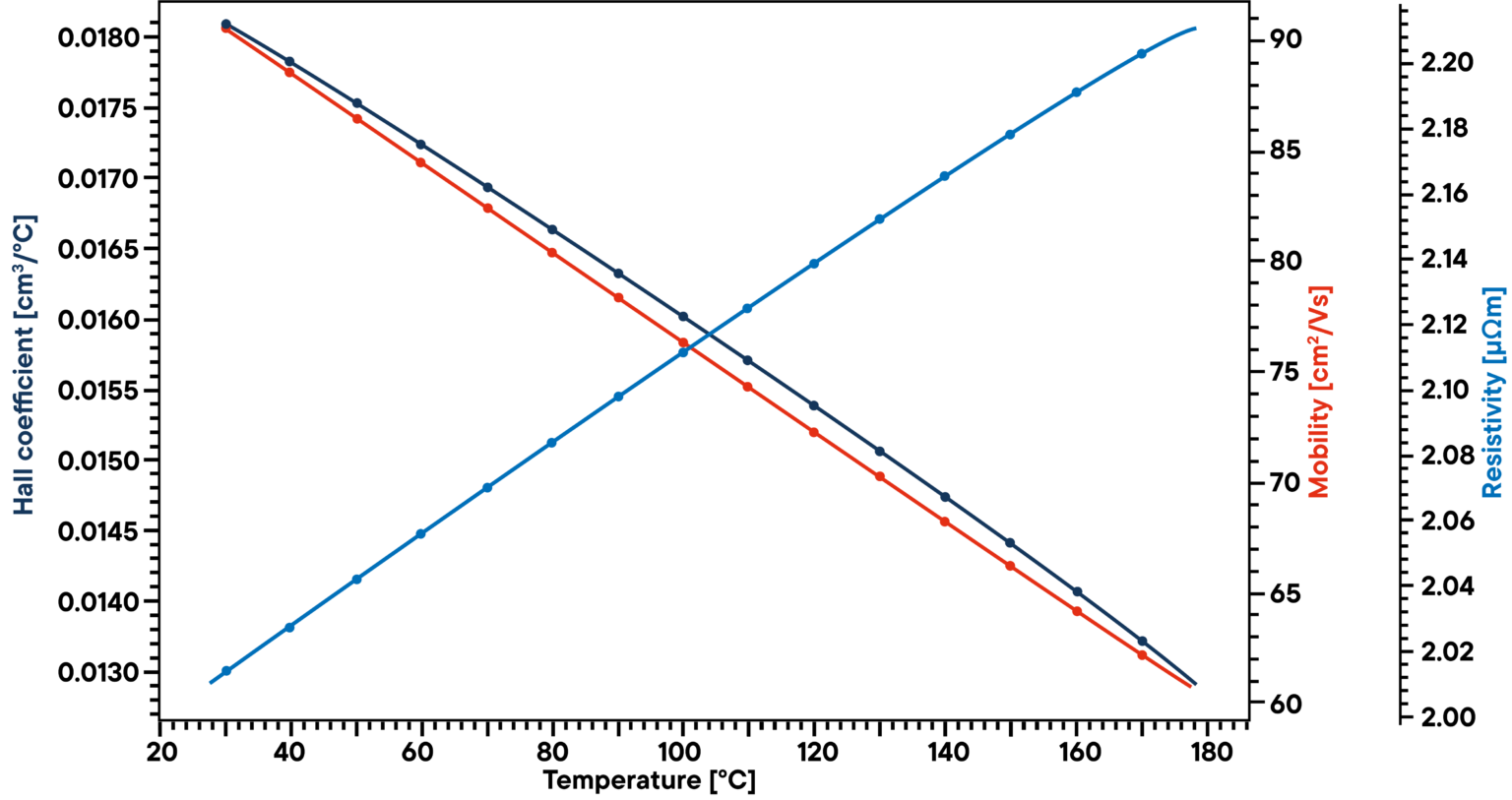
Application Case 3: Hall Coefficient and Electrical Transport Properties of Semiconductor Materials (Hall / Resistivity)
In semiconductor and electronic device design, carrier concentration, mobility, and carrier type (n-type / p-type) are key parameters determining electrical performance. Using Hall measurement systems, Hall coefficient, resistivity, and mobility can be obtained over a wide temperature range, applicable to bulk materials, thin films, and various inorganic semiconductor samples.
Measurement and analysis focus:
- Hall coefficient and carrier type: Determination of n-type or p-type behavior and estimation of carrier concentration.
- Mobility and conduction mechanisms: Analysis of scattering mechanisms and temperature-dependent behavior by combining resistivity and Hall data.
- Material and process comparison: Comparison of the effects of different doping conditions, annealing treatments, or thin-film processes (PVD / CVD, etc.) on electrical transport properties.
Such measurements are not only fundamental tools for R&D laboratories, but are also widely used for process monitoring and quality verification, such as electrical inspection of outsourced wafers or procured materials.
Overview of Common Thermal Analysis and Thermophysical / Electrical Property Measurement Techniques for the Semiconductor and Electronics Industry
- Differential scanning calorimetry (DSC): Evaluation of glass transition temperature, melting, and curing behavior of encapsulation resins, adhesives, and plastic components.
- Thermogravimetric analysis (TGA): Measurement of decomposition temperature, inorganic filler content, and volatilization behavior of surface treatment agents.
- Thermomechanical analysis / dilatometry (TMA / DIL): Determination of linear coefficients of thermal expansion (CTE) for substrates, packaging materials, and adhesive layers for thermal stress assessment.
- Laser flash analysis (LFA): Measurement of thermal diffusivity and thermal conductivity of substrates, ceramics, and packaging materials to support thermal simulation and heat dissipation design.
- Transient thermal conductivity and heat flow measurement (THB, HFM, TIM testing): Evaluation of thermal conductivity and contact thermal resistance of thermal greases, phase change materials, and insulation pads.
- Thermoelectric property measurement (Seebeck / Resistivity / ZT): Analysis of thermoelectric performance for thermoelectric materials, sensor materials, and reference alloys.
- Hall and electrical transport property measurement: Acquisition of Hall coefficient, carrier concentration, mobility, and resistivity to support semiconductor material and thin-film development.
Based on chip design, packaging architecture, and thermal management strategies, we assist in planning suitable combinations of measurement techniques and experimental conditions, and provide feasibility testing and technical support to enable product development, process optimization, and failure analysis.
Do You Need Material Thermophysical or Electrical Property Evaluation Solutions?
We provide measurement services, technical consulting, and project collaboration to help you improve R&D efficiency and product reliability.
Allen Kuo|FST International|Email: Allen.kuo@fstintl.com.tw