
Hydrogen Technology Applications|Thermal Analysis in Hydrogen Cycles, Hydrogen Storage, and Fuel Cells
Hydrogen is regarded as a key energy carrier for green energy and future mobility. From renewable hydrogen production, compressed or chemical hydrogen storage, to fuel cells and synthetic fuel power generation, the entire hydrogen value chain involves extensive material development and safety evaluation. Through thermal analysis and thermophysical property measurements, material phase transitions, decomposition behavior, and heat transfer characteristics can be accurately characterized under controlled temperature and atmosphere conditions, providing critical data for hydrogen system design and lifetime assessment.
Why Do Hydrogen Technologies Require Thermal Analysis and Thermophysical Property Measurements?
Hydrogen systems span multiple subfields, including renewable power generation, electrolyzers, hydrogen storage materials, fuel cells, and high-temperature thermal energy storage. Each stage involves high-temperature operation, pressure variations, and risks associated with the high reactivity of hydrogen. Proper thermal analysis and thermophysical property measurements enable engineers to understand material behavior at the R&D stage, reducing risks during scale-up and real-world operation.
- Renewable energy and structural materials: Measurement of thermal expansion and curing behavior of composite materials and support structures for wind turbines to ensure long-term operational reliability.
- Electrolyzers and catalytic materials: Evaluation of thermal stability and heat transfer behavior of electrodes and supports under high temperature and high current density.
- Hydrogen storage materials and surface adsorption: Quantification of hydrogen adsorption capacity, desorption rate, and exothermic behavior using high-pressure TGA / STA and adsorption measurements.
- Fuel cells and stack packaging: Measurement of thermal expansion and heat transfer of sealing materials, solders, and bipolar plates to prevent thermal fatigue and leakage risks.
- Hydrogen safety and system thermal management: Use of thermal conductivity, specific heat, and decomposition temperature data to support system safety design and gas handling unit planning.
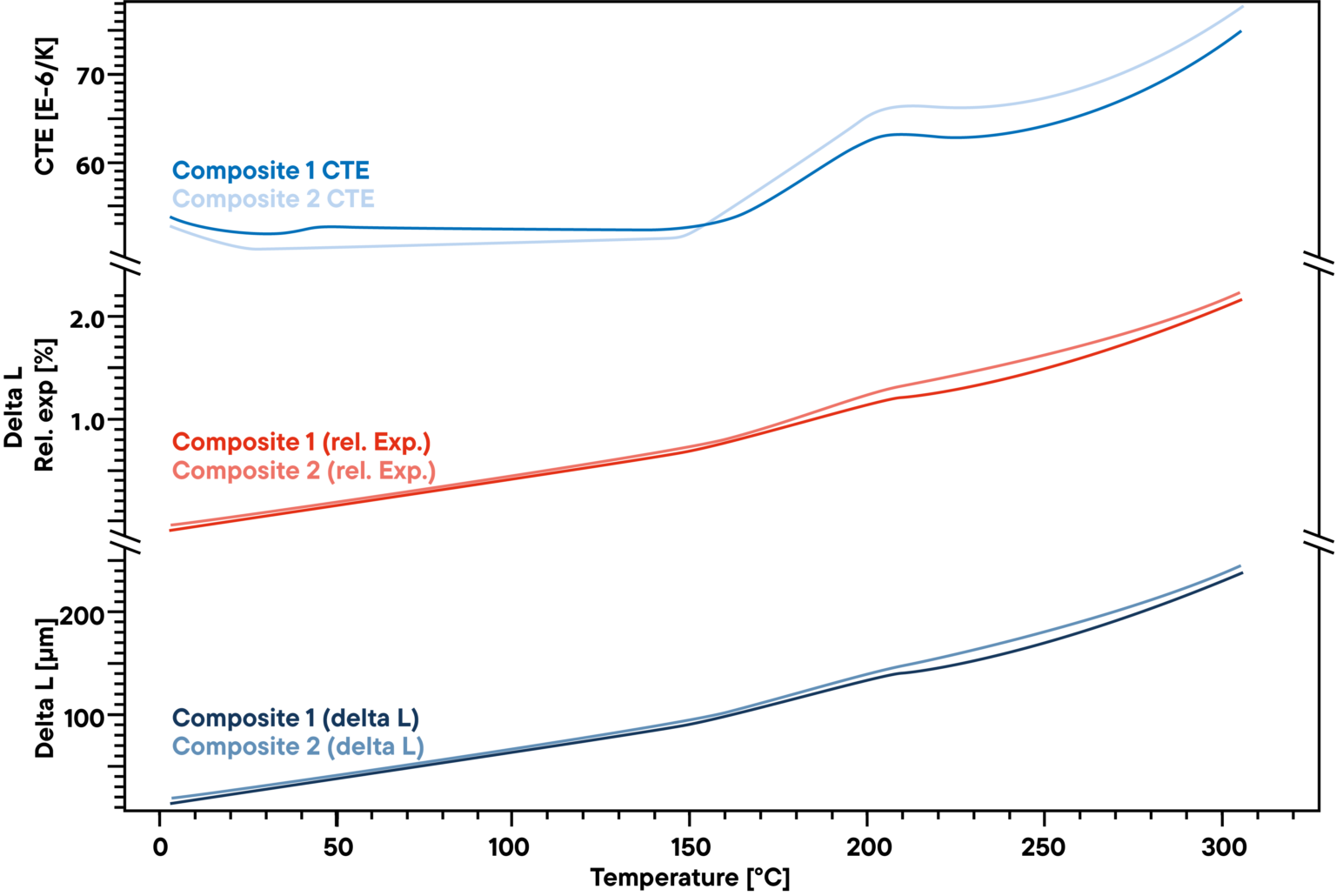
Application Case 1: Thermal Expansion and Curing Behavior of Lightweight Composite Materials in Renewable Energy Equipment (DIL / DEA)
The starting point of the hydrogen economy lies in renewable energy, such as wind and solar power generation. Wind turbine blades and large composite structures are commonly made of lightweight polymer composites or aluminum alloys. Improper control of thermal expansion or curing conditions can lead to warpage, microcracks, or fatigue failure during long-term operation. Using dilatometers and dielectric analysis (DEA), dimensional changes and crosslinking behavior during thermal cycling can be accurately characterized.
Measurement and analysis focus:
- Coefficient of thermal expansion (CTE): Comparison of expansion behavior of different composite materials from room temperature to above 200 °C to verify compatibility with metallic joints.
- Curing process monitoring: Use of DEA to measure ionic viscosity and its slope to determine reaction onset, maximum reaction rate, and curing completion time.
- Raw material quality and batch consistency: Comparison of thermal expansion and curing curves to identify differences among resin or reinforcement fiber batches.
These data support design guidelines for wind turbine blades, hydrogen production equipment support structures, and other lightweight components, reducing structural risks caused by long-term loading and thermal cycling.
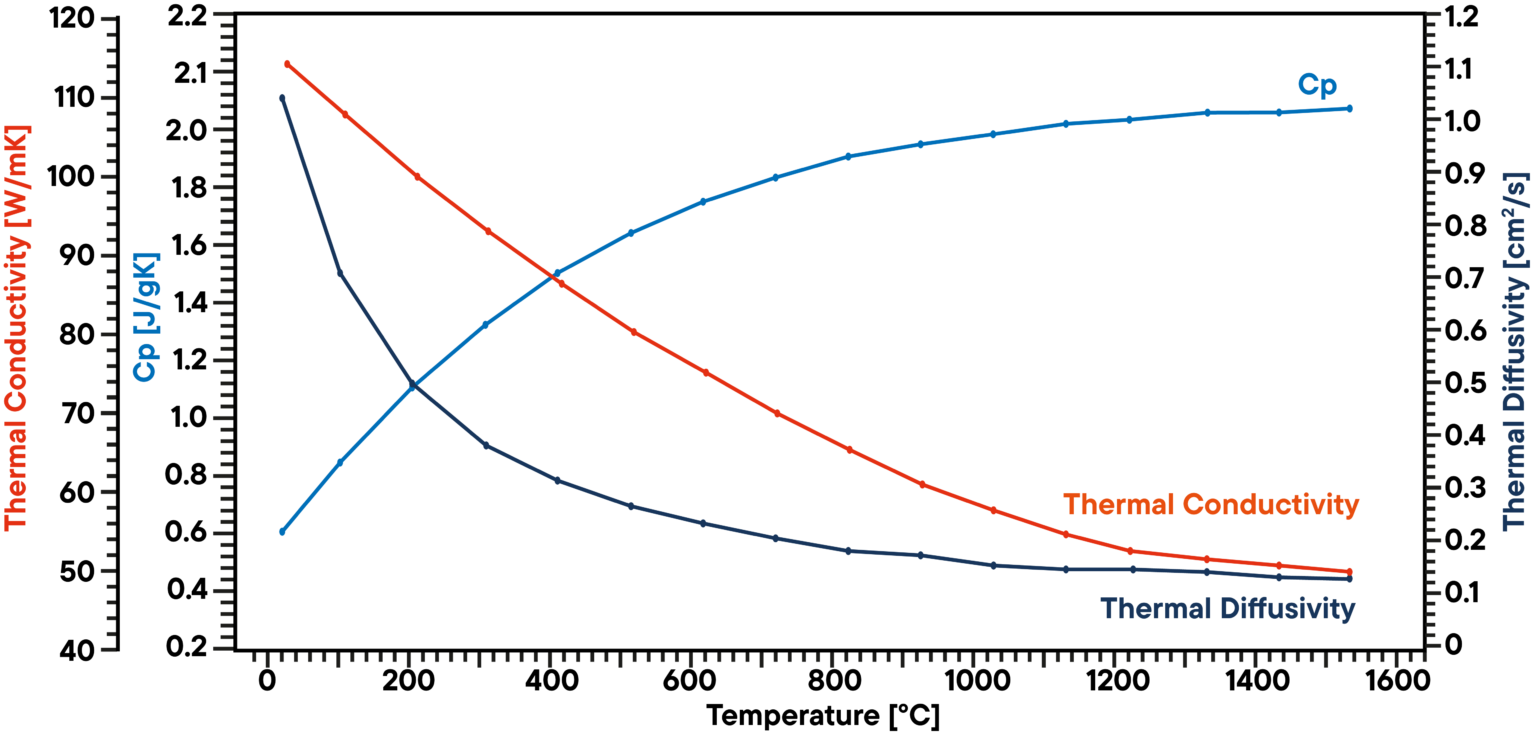
Application Case 2: Thermal Expansion and Thermal Conductivity of Electrolyzer Catalytic Electrodes and Heat-Conducting Materials (DIL / LFA)
High-efficiency water electrolysis and synthetic fuel processes rely on stable electrodes and catalytic materials. Platinum and its alloys are commonly used as electrodes and catalytic layers, while graphite and carbon materials serve as current collectors and heat-conducting structures. Variations in thermal expansion and thermal conductivity up to 1000 °C directly affect sealing reliability and thermal management design of electrolyzer stacks.
Measurement and analysis focus:
- Thermal expansion of noble metals and alloys: Comparison of expansion curves of platinum and platinum–rhodium alloys to evaluate dimensional deviation and thermal stress under high-temperature operation.
- Thermal transport properties of graphite: Measurement of thermal diffusivity and specific heat using the laser flash method (LFA) to calculate temperature-dependent thermal conductivity.
- Thermal management design: Use of thermal conductivity and specific heat data as boundary conditions for simulations to optimize temperature uniformity in electrolyzers or reactors.
Through these thermal analysis and thermophysical property measurements, electrical conductivity, catalytic activity, and thermal stability can be jointly considered during material selection, reducing risks of structural failure or performance degradation under high-temperature operation.
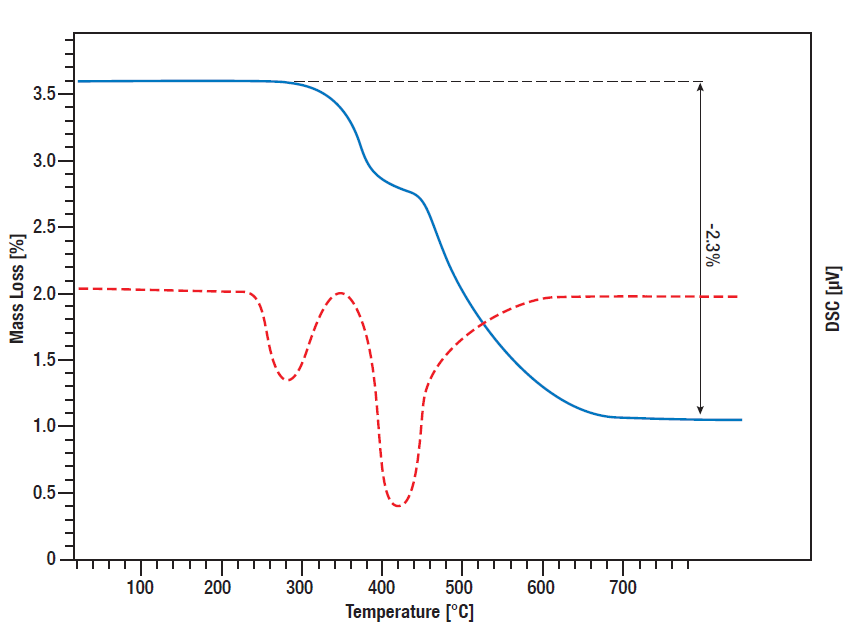
Application Case 3: Metal Hydride Hydrogen Storage and Fuel Cell Hydrogen Supply Behavior (STA HP / GSA / DIL)
Due to the small molecular size and fast diffusion of hydrogen, storage solely as compressed gas presents challenges in terms of equipment cost and safety. Metal hydrides and porous materials (such as metal–organic frameworks and catalyst supports) can store hydrogen via surface adsorption or chemical bonding, and release hydrogen through heating or depressurization, making them suitable for fuel cells and chemical processes. High-pressure STA and gravimetric sorption systems enable simultaneous acquisition of mass changes and heat effects.
Measurement and analysis focus:
- Decomposition behavior of metal hydrides: Use of STA to measure mass loss and exothermic/endothermic peaks of materials such as titanium hydride from room temperature to 800 °C, corresponding to hydrogen release temperature ranges and thermal effects.
- High-pressure adsorption and heat release: Measurement of hydrogen uptake and adsorption enthalpy of catalyst supports such as Pt/Al under pressures of several tens of bar using high-pressure TG-DSC or gravimetric adsorption systems.
- Hydrogen supply dynamics and safety assessment: Estimation of hydrogen absorption/desorption rates from mass and heat flow curves to support fuel cell start-up/shut-down strategies and safety control (avoiding local overheating).
Combined with linear expansion and thermal conductivity data, these results enable comprehensive evaluation of the overall thermal behavior and long-term reliability of hydrogen storage vessels, hydrogen supply modules, and fuel cell stacks.
Overview of Common Thermal Analysis and Thermophysical Property Measurement Techniques for Hydrogen Technologies
- Differential scanning calorimetry (DSC / STA): Measurement of phase transitions, decomposition behavior, and specific heat for evaluating thermal stability of catalytic materials, hydrogen storage materials, and packaging materials.
- Thermogravimetric analysis and high-pressure STA (TGA / STA HP): Measurement of mass changes under high-pressure hydrogen or steam environments to simulate gasification, synthetic fuel production, and hydrogen storage cycles.
- Thermal expansion measurement (DIL / TMA): Determination of linear coefficients of thermal expansion for metals, ceramics, and composites to avoid excessive thermal stress in high-temperature hydrogen environments.
- Thermal conductivity and thermal diffusivity measurement (LFA, etc.): Establishment of heat transfer models for electrodes, bipolar plates, and structural components to support thermal management design of electrolyzers and fuel cells.
- Adsorption and desorption heat measurement (GSA / TG-DSC): Simultaneous measurement of hydrogen adsorption capacity and heat effects to optimize cycling efficiency of hydrogen storage materials and catalytic systems.
Do You Need Material Thermophysical or Electrical Property Evaluation Solutions?
We provide measurement services, technical consulting, and project collaboration to help you improve R&D efficiency and product reliability.
Allen Kuo|FST International|Email: Allen.kuo@fstintl.com.tw