
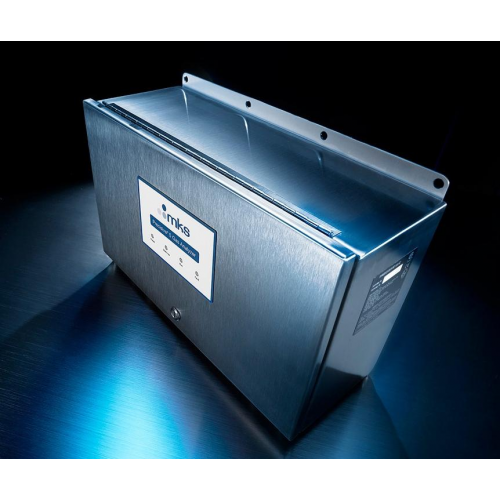
Precisive – Infrared Optical Hydrocarbon Analyzer (Tunable Filter Spectroscopy, TFS)
The Precisive series is a multi-channel, full-spectrum hydrocarbon analyzer featuring proprietary TFS™ Tunable Filter Spectroscopy. It provides gas-chromatography-like selectivity for real-time analysis of C1–C5 and even more complex hydrocarbons, without the need for carrier gas or frequent calibration. This represents a new-generation, high-precision infrared sensing platform designed to replace conventional NDIR.
Key Features
- Multi-channel hydrocarbon analysis: real-time measurement of light hydrocarbons such as C1–C5
- Breakthrough TFS™ technology: high selectivity and high resolution capable of resolving complex spectral overlap
- Extremely low maintenance requirements with minimal zero and span drift
- Fast measurement: 1-second update rate with in-line flow-through analysis
- No carrier gas required and no analyzer exhaust emissions
- Low cross-interference with high stability and linearity
- Customizable target components, concentration ranges, and application conditions
TFS™ Tunable Filter Spectroscopy
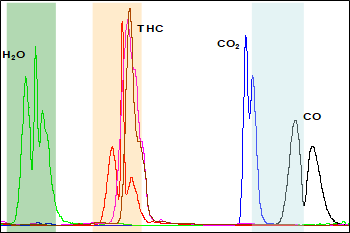
TFS™ is the only optical platform worldwide capable of performing “GC-like” hydrocarbon component analysis using full-spectrum scanning. By adjusting the incident angle of a Fabry–Perot etalon via a stepper motor, the system scans a continuous spectrum from UV to Mid-IR, enabling simultaneous peak/valley interpretation and multi-component quantification.
- 1-second update rate with fully real-time measurement
- No carrier gas or sampling columns required; direct flow-through analysis
- Permanent span calibration with virtually no need for on-site recalibration
- Remote operation, parameter setup, and monitoring
- Extremely low water vapor interference, suitable for complex field environments
Differences Compared with Conventional NDIR
Traditional NDIR relies on fixed optical filters to isolate specific wavelength bands, which results in:
- Inability to resolve spectral overlap (e.g., C1–C6)
- Dependence on interference-free peaks, significantly limiting applications
- Low selectivity, making component separation impossible
TFS continuously scans the spectrum with high optical throughput and selectivity, allowing direct analysis of mixed hydrocarbons and complex background gases, delivering far superior selectivity and accuracy compared to NDIR.
Advantages of TFS Technology
- Multi-component analysis (C1–C6, complex hydrocarbons, specialty gases)
- High sensitivity with low detection limits
- Highly flexible spectral platform spanning UV to IR
- Robust hardware with extremely low maintenance demand
- Stable data performance with calibration-free, long-term reliable operation
Applications
- Ethylene processes (cracked gas, feed gas, flare emission monitoring)
- Natural gas fractionation and reforming process control
- Coal-to-olefins (MTO) reaction monitoring
- PE/PP polymerization recycle gas monitoring
- Refinery fractionation control and FCC monitoring
- Electronics specialty gas blending analysis (B₂H₆, GeH₄, AsH₃, PH₃, etc.)
- Zero-emission monitoring with analyzed gas returned to production lines
- Capable of analyzing both % level and ppm level components