
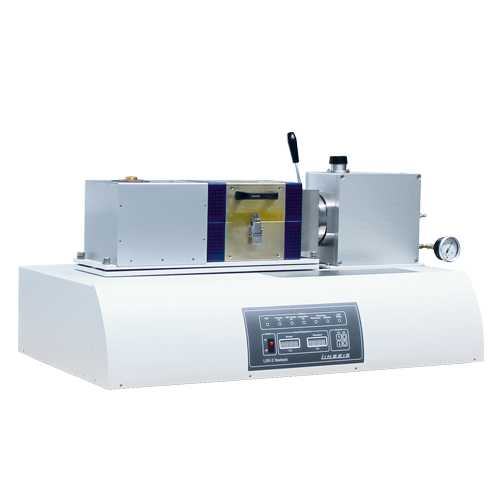
LZT-Meter Integrated Thermoelectric Figure-of-Merit Measurement System (LFA 1000 + LSR Platform)
The LZT-Meter is the first commercial, fully integrated system for direct measurement of the thermoelectric figure of merit (ZT). It combines Laser Flash thermal diffusivity and thermal conductivity measurement (LFA 1000) with the LSR thermoelectric electrical-property measurement platform in a single instrument. Using only one disk-shaped sample, the system can obtain thermal conductivity λ, Seebeck coefficient S, and electrical resistivity / conductivity σ, and subsequently calculate the thermoelectric figure of merit ZT.
This integrated design significantly reduces laboratory space requirements and total investment cost compared to multiple standalone systems. It is especially suitable for R&D laboratories and research institutes that prioritize measurement reliability and cost efficiency, with moderate sample throughput requirements.
Advantages of the Integrated Measurement Concept
- Single sample geometry: One disk-shaped sample is sufficient to measure λ, S, σ, and ZT.
- Elimination of geometric errors: No need for multiple samples or re-machining, avoiding differences in shape and surface finish.
- Consistent chemical composition: All properties are measured on the same sample, ensuring identical composition, porosity, and microstructure.
- Identical measurement conditions: Temperature, atmosphere, and environmental conditions remain the same for all parameters, minimizing systematic errors.
- High-resistance sample support: Optional high-ohmic measurement capability for low-conductivity materials.
- Optional Harman measurement: DC Harman method for direct ZT measurement on thermoelectric legs.
- Camera option: Precise probe distance measurement to improve electrical resistivity accuracy.
- All benefits of the LSR platform retained: Modular furnaces, thin-film adapters, and multi-atmosphere capability.
Measurement Principles and System Configuration
For thermoelectric electrical measurements, the LZT-Meter adopts the proven LSR-3 platform technology, including steady-state slope measurement for the Seebeck coefficient and DC four-probe resistivity measurement. Thermal diffusivity α is measured using the LFA 1000 Laser Flash technique, and thermal conductivity λ is calculated using measured specific heat cp and density ρ.
Three interchangeable furnace options are available to cover a wide temperature range:
- High-speed infrared furnace: suitable for rapid heating/cooling and precise temperature control.
- Low-temperature furnace: measurements down to approximately −100 °C for low-temperature thermoelectric research.
- High-temperature furnace: maximum measurement temperature up to 1100 °C.
The supplied software integrates LFA and LSR data into a unified evaluation workflow and supports optional Harman ZT models, allowing calculation and comparison of all ZT-related parameters within a single user interface.
Key Technical Specifications
LSR-3 Section (Electrical Properties / Seebeck)
- Temperature range: −100 °C to 500 °C; RT to 1100 °C (depending on furnace configuration)
- Measurement principles:
- Seebeck coefficient: steady-state DC method / slope method
- Electrical resistivity: DC four-probe method
- Atmospheres: inert, reducing, oxidizing, vacuum
- Sample mounting: vertical positioning between two electrodes; optional foil / thin-film adapters
- Sample dimensions (cylindrical / rectangular): 2–5 mm cross-section, length up to 23 mm; diameter up to 6 mm
- Disk-shaped samples: diameter 10 / 12.7 / 25.4 mm
- Probe distance: adjustable 4 / 6 / 8 mm
- Water cooling: required
- Seebeck range: 1–2500 µV/K; accuracy approx. ±7%, repeatability ±3%
- Electrical conductivity range: 0.01–2×10⁵ S/cm; accuracy approx. ±5–8%, repeatability ±3%
- Current source: 0–160 mA low-drift current source
- Electrode materials: Ni (−100 to 500 °C) / Pt (−100 to 1500 °C)
- Thermocouples: type K / S / C
Laser Flash Section (LFA Functionality)
- Pulse source: Nd:YAG laser, single-pulse energy approx. 25 J
- Pulse duration: approx. 0.01–5 ms, adjustable
- Detectors: high-speed InSb / MCT infrared detectors
- Thermal diffusivity range: approx. 0.01–1000 mm2/s
- Thermal conductivity λ: calculated from α · cp · ρ, suitable for a wide range of solid materials
LSR-4 Upgrade (Optional)
- DC Harman method: direct ZT measurement on thermoelectric legs.
- AC impedance spectroscopy: direct ZT measurement on thermoelectric modules (TEG / Peltier).
- Temperature range: −100 to 400 °C or RT to 400 °C (depending on furnace).
- Sample holder: needle-contact design for near-adiabatic conditions.
- Leg sample dimensions: 2–5 mm cross-section, length up to 23 mm; diameter up to 6 mm.
- Module size: up to approximately 50 × 50 mm.
Accessories and Measurement Options
Sample Holders and Supported Geometries
- Disk sample holders: diameter 10 / 12.7 / 25.4 mm (standard LFA geometry).
- Cylindrical sample holders: diameter up to 6 mm, height approx. 23 mm.
- Bar-shaped sample holders: cross-section up to 5 × 5 mm, height approx. 23 mm.
- Thin-film / foil adapters: suitable for coatings, deposited films, and nanostructured layers.
Thermocouple and Camera Options
- Standard thermocouples: for general high-precision measurements.
- Sheathed thermocouples: for harsh or corrosive environments.
- Type K: for low-temperature measurements.
- Type S: for high-temperature measurements.
- Type C: suitable for samples that may cause platinum poisoning.
- Camera option: visual probe distance measurement to improve resistivity accuracy, supported by dedicated software modules.
Integrated Software Features
LFA-Related Functions
- Precise pulse-length calibration and pulse mapping.
- Heat-loss correction and two-/three-layer system analysis.
- Evaluation of interfacial thermal contact resistance in multilayer structures.
- Specific heat cp calculation with guided modeling tools.
LSR-Related Functions
- Support for cylindrical, rectangular, and disk-shaped samples.
- Programmable temperature segments and atmosphere control.
- Thin-film adapters for flexible or rigid films.
- Guided measurement workflows integrating Seebeck, conductivity, and Harman-ZT measurements.
General Software Features
- Automatic evaluation of Seebeck coefficient and electrical conductivity with automated contact control.
- Multi-step automated measurement programs and temperature gradient design.
- Automatic fitting and evaluation for Harman measurements (optional).
- Real-time curve display, automatic/manual scaling, and flexible axis combinations.
- Built-in first- and second-derivative and mathematical analysis tools.
- Integrated database for storage and management of all measurement and evaluation curves.
- Multi-task and multi-user account support.
- Overlay comparison and annotation of multiple curves.
- EXCEL® and ASCII data export for further analysis and reporting.
- Baseline calculation and trend analysis with confidence intervals.
Typical Applications and Examples
- Telluride-based thermoelectric materials: evaluation of Seebeck coefficient and resistivity from room temperature to 200 °C.
- Copper / aluminum metals: comparison of measured thermal conductivity with literature values to verify LFA accuracy (typically within 2%).
- Pyroceram 9606 glass-ceramic: standard LFA reference material for system calibration and long-term stability monitoring.
- Isotropic graphite: comparison of thermal diffusivity data measured by Linseis LFA and international laboratories, with deviations within 2%.
Video: LZT-Meter System Introduction and Demonstration (YouTube)
Mobile: +886-919-138-108
Email: Allen.kuo@fstintl.com.tw