
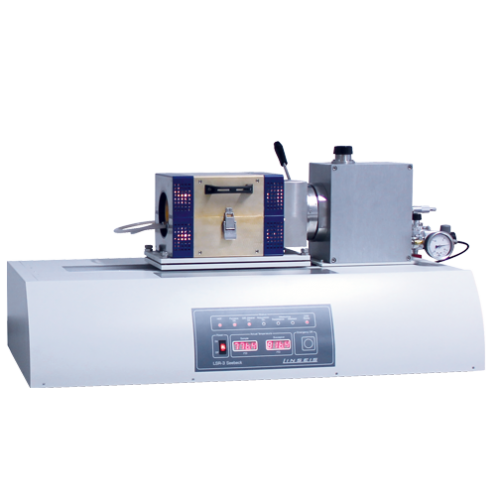
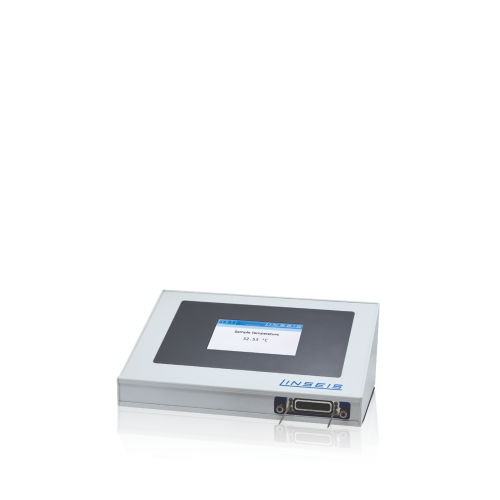
LSR-Platform Thermoelectric Material Measurement System|LSR-3 / LSR-4
The LSR-Platform is a dedicated measurement platform for thermoelectric materials, enabling near-complete characterization of key properties for both bulk solids and thin-film thermoelectric materials. In the base version LSR-3, the system performs fully automated and simultaneous measurements of the Seebeck coefficient and conductivity / resistivity, with a maximum operating temperature up to 1500°C, covering thermoelectric evaluation from low to high temperatures.
The platform can be expanded through various optional modules, including a low-temperature module, thin-film/foil adapters, a high-ohm measurement option, and a camera positioning system. The advanced version LSR-4 integrates the Harman test method and impedance spectroscopy, allowing direct determination of the ZT value and back-calculation of thermal conductivity, forming a complete thermoelectric analysis solution from material level to module level.
Measurement Principles and Core Methods
1. Seebeck Coefficient Measurement Principle
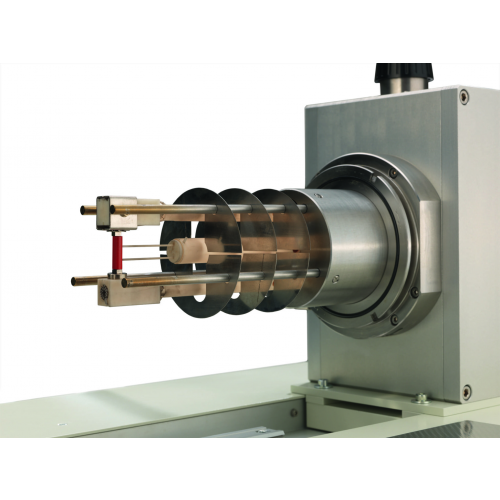
A cylindrical, square, or rectangular sample is clamped vertically between the upper and lower electrodes. The lower electrode (and optionally the upper electrode) contains an auxiliary heater, while the entire measuring structure is placed in a furnace and heated to the target temperature. After reaching the set temperature, the auxiliary heater is activated to create a predefined temperature gradient across the sample. Two lateral thermocouples, T1 and T2, measure the temperature difference between the hot and cold sides, ΔT = T2 – T1. At the same time, the thermoelectric voltage Vth is measured using the lead wires of one thermocouple.
A patented spring mechanism ensures stable contact between the thermocouples and the sample, significantly improving electrical contact and temperature measurement accuracy. By performing linear regression on the measured ΔT and Vth, the Seebeck coefficient can be calculated.
.png)
2. Resistivity / Conductivity Measurement Principle
Resistivity measurement is based on the DC 4-wire technique, effectively eliminating the influence of lead and contact resistances. Under thermal equilibrium conditions (ΔT = 0 K), a stable DC current IDC is applied to the sample through the upper and lower electrodes, and the voltage drop VΩ across the sample length (t) is measured using the thermocouple lead wires. With the sample geometry and VΩ, resistivity and conductivity can be calculated.
.png)
3. Harman Method for ZT Measurement (LSR-4)
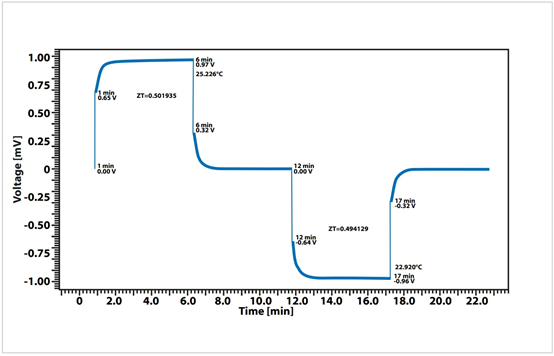
The Harman method determines the thermoelectric figure of merit ZT by measuring the time-dependent voltage response of a sample after applying a DC current. During the test, a DC current is injected into the thermoelectric sample via needle-like contacts. Due to the Peltier effect, one end of the sample is locally heated or cooled, generating a characteristic temperature distribution under approximately adiabatic conditions.
By taking the ratio between the initial ohmic voltage drop (without a temperature difference) and the steady-state voltage (including thermoelectric voltage), the dimensionless ZT can be directly obtained, and thermal conductivity λ can be back-calculated. Compared with the traditional approach of combining data from multiple instruments to calculate ZT, the Harman method requires only a single system and a single sample, resulting in a shorter measurement path and reduced error. However, its applicability is mainly limited to good thermoelectric materials and temperatures typically below about 400°C.
.png)
System Architecture and Modular Design
- A near-ideal one-dimensional heat-flux design ensures that both heat flow and electric current pass uniformly through the sample.
- Interchangeable furnaces enable a wide temperature range from −100°C to 1500°C.
- High-ohm measurement options and adjustable thermocouple spacing support high-resistance or challenging samples.
- Integration of the Harman method for direct ZT measurement on thermoelectric legs.
- Impedance spectroscopy for direct ZT evaluation of thermoelectric modules (TEG / Peltier modules).
- A high-speed IR furnace provides rapid heating and stable temperature control, improving sample throughput.
- Multiple thermocouple types (K / S / C) can be selected based on low-temperature, high-temperature, or Pt-poisoning risk considerations.
- An optional camera can accurately measure probe distance, improving resistivity calculation accuracy.
Thin-Film and Foil Adapters
To address the growing demand for nano-structured and thin-film sample research, the platform offers two dedicated sample holders:
- Standalone thin-film / foil adapter
- Thin-film / coating-on-substrate adapter
With dedicated holder designs, multiple thin-film samples can be compared systematically under different coating thicknesses and process conditions, making the platform suitable for thin-film thermoelectrics and interfacial heat-transfer research.
.png)
Disc Samples and Geometry Support
The LSR-Platform supports various sample geometries:
- Cylindrical samples: diameter up to 6 mm, height up to 23 mm
- Bar samples: cross section up to 5 × 5 mm, height up to 23 mm
- Disc samples: diameter 10, 12.7, 25.4 mm
The sample contact area is recommended not to exceed the electrode area to maintain one-dimensional transport of heat flow and current. With an optional dedicated disc-sample holder (developed in cooperation with a research institute), Seebeck and conductivity can be measured on the same disc geometry, and combined with Laser Flash data for thermal conductivity to form a complete ZT evaluation workflow.
.png)
Key Specifications|LSR-3
- Temperature range: −100°C to 500°C; RT to 800 / 1100 / 1500°C (depending on furnace configuration)
- Measurement principles:
- Seebeck coefficient: steady-state DC method / slope method
- Resistivity: DC 4-wire measurement
- Atmospheres: inert, reducing, oxidizing, vacuum
- Sample mounting: vertically clamped between upper and lower electrodes; compatible with thin-film/foil adapters
- Sample size (cylinder / rectangular): cross section 2–5 mm, length up to ~23 mm; diameter up to 6 mm
- Sample size (disc): diameter 10 / 12.7 / 25.4 mm
- Probe spacing: adjustable 4 / 6 / 8 mm
- Water cooling: required
- Seebeck measurement range: 1–2500 μV/K; accuracy ~ ±7%, repeatability ~ ±3%
- Conductivity measurement range: 0.01–2×10⁵ S/cm; accuracy ~ ±5–8%, repeatability ~ ±3%
- Current source: 0–160 mA with excellent long-term stability
- Electrode materials: Ni (−100 to 500°C), Pt (−100 to 1500°C)
- Thermocouple types: K / S / C
* With the camera option, resistivity accuracy can be further improved.
LSR-4 Upgrade Features
- DC Harman method: direct ZT measurement on thermoelectric legs
- AC impedance spectroscopy: direct ZT determination for thermoelectric modules (TEG / Peltier)
- Hall and carrier-property extension: can be combined with other platforms for full carrier analysis
- Temperature range: −100 to 400°C, or RT to 400°C (depending on configuration)
- Sample holder: needle-contact design for Harman measurement under adiabatic conditions
- Leg dimensions: 2–5 mm width, length up to 23 mm, or diameter up to 6 mm
- Module size: up to approx. 50 × 50 mm
Software and Application Examples
The system includes Windows-based thermal analysis software for test setup, measurement control, data storage, and evaluation. The interface supports graphical display and multi-sample comparison, with data export to Excel / ASCII for post-processing and report preparation.
Typical Application Examples
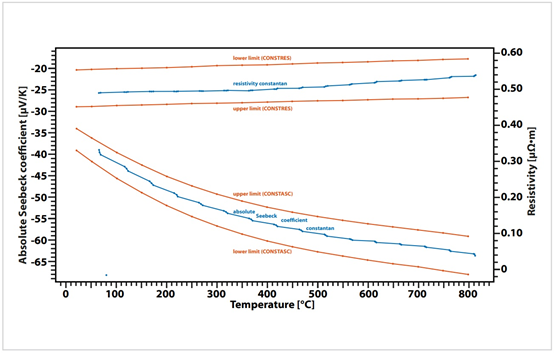
- Constantan reference sample: can be used as a verification standard for long-term stability of Seebeck and conductivity at high temperatures (up to 800°C).
- SiGe alloy: evaluation of thermoelectric behavior for high-temperature waste-heat recovery and property changes in the low-temperature range.
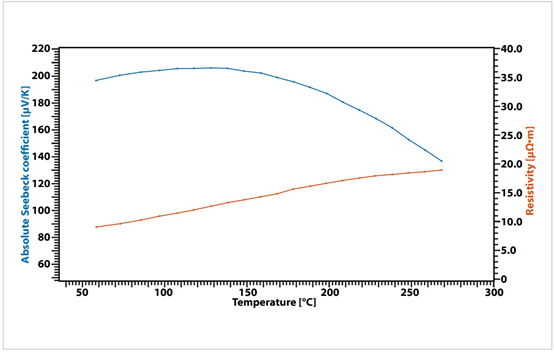
- Bi2Te3 reference sample: direct ZT measurement using the Harman method to validate system accuracy.
Video: LSR-Platform Demo (YouTube)
Mobile: 0919-138-108
Email: Allen.kuo@fstintl.com.tw