
Why Is Heat Transfer Behavior in Solids and Liquids Important?
Thermal transport properties of solids and liquids are becoming increasingly important across many application fields, including automotive, aviation, aerospace, energy, ceramics, building materials, and the glass industry. To ensure reliable thermal management under extreme conditions, accurate understanding of a material’s thermal behavior is essential.
In recent years, rising energy costs and the increasing cooling demands of highly integrated semiconductor equipment have further accelerated the focus on building insulation and electronic thermal management, driving rapid growth in related research and development.
Key Advantages of Thermal Property Measurement
- Highest accuracy: Uses absolute measurement technology, no calibration or reference samples required.
- Fast measurement: Complete thermal property data can be obtained within minutes.
- Non-destructive testing: Suitable for brittle, porous, and transparent materials.
- Wide measurement range: Supports various materials and temperature conditions.
- Easy operation: Can be used without specialized training.
- Simple sample preparation: Solids only require two flat contact surfaces.
- High material compatibility: Applicable to solids, liquids, powders, and pastes.
- Low influence: Sensor contact pressure has minimal impact on the measurement results.
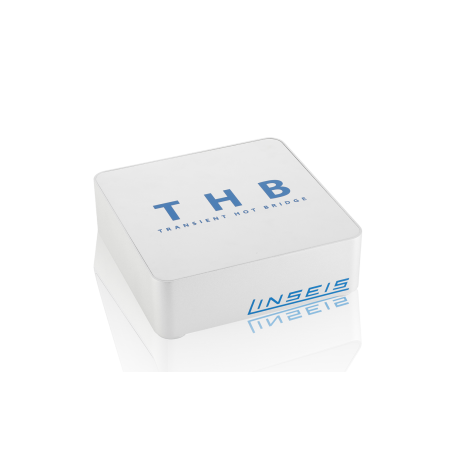
THB Transient Hot Bridge Thermal Conductivity Tester (3-in-1: Thermal Conductivity / Thermal Diffusivity / Specific Heat Capacity)
The THB Transient Hot Bridge system measures thermal conductivity, thermal diffusivity, and specific heat capacity for materials of different types and geometries. Based on the transient hot bridge method, it enables absolute measurement within a short time without reference samples, and it is suitable for solids, bulk materials, gels, pastes/colloids, and liquids.
Solid sample preparation is straightforward—only two flat contact surfaces are required. The measurement quality is comparable to traditional techniques such as the guarded hot plate method and the flash method.
Advantages of the New Generation THB System
- High-precision thermal conductivity measurement capability.
- One-click automated measurement to reduce operating errors.
- Low uncertainty for both thermal conductivity and thermal diffusivity.
- Built-in calorimetric function for specific heat capacity calculation.
- Measurement can be completed within seconds.
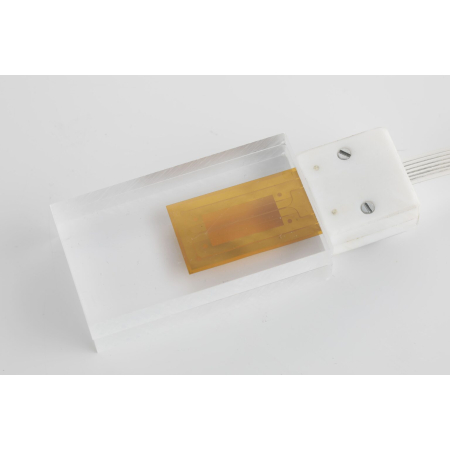
- Half-shell sensor design supports non-destructive testing.
- Compact footprint for easy deployment and laboratory integration.
THB Series Model Overview
THB Basic
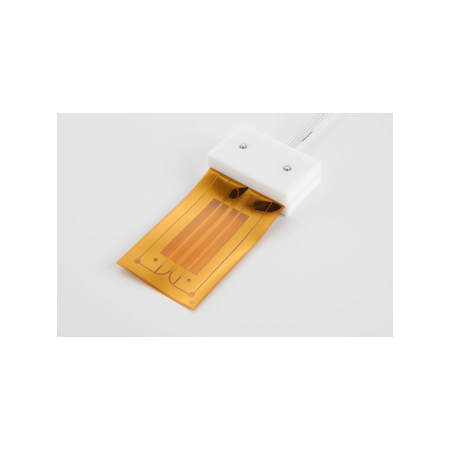
- Includes a THB/B sensor (optional THB/A available).
- Suitable for low thermal conductivity materials such as insulation and building materials.
- Supports basic remote installation.
THB Advance
- Configured with a QSS sensor (optional THB/A, THB/B, or hot-point sensor available).
- Wide measurement range for solids, liquids, pastes, and powders.
- Ideal for research institutes, laboratories, and universities.
- Supports remote installation and deployment.
THB Ultimate
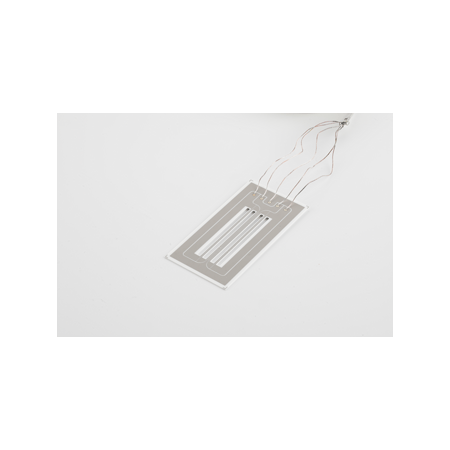
- Comes with two high-performance sensors as standard.
- Broadest application range, from insulators to high thermal conductivity metals.
- Supports solids, liquids, bulk materials, and thin films.
- Professional on-site installation and training services available.
Technical Data
- Thermal conductivity range: 0.005 to 1800 W/(m·K) (depending on model)
- Thermal diffusivity range: 0.05 to 1200 mm²/s
- Specific heat capacity: 100 to 5000 kJ/(m³·K)
- Measurement time: Solids approx. 1–10 minutes; liquids approx. 1–120 seconds
- Sensor operating temperature: -150°C to 700°C
- Sample size: Minimum 1.5×1.5×2 mm; maximum not limited
* Actual sample dimensions depend on the furnace and sensor configuration. * Measurement accuracy is related to sample preparation quality.
Application Scope
- Material types: Polymers, organic materials, metals, alloys, powders, colloids, and liquids.
- Industries: Automotive, aviation, aerospace, power generation and energy, chemical processing, pharmaceutical, food, semiconductor and electronics, research institutes, and universities.
Technical Video
Mobile: +886-919-138-108
Email: Allen.kuo@fstintl.com.tw