
CHIP-DSC 100|High-Speed Chip-Based Differential Scanning Calorimeter
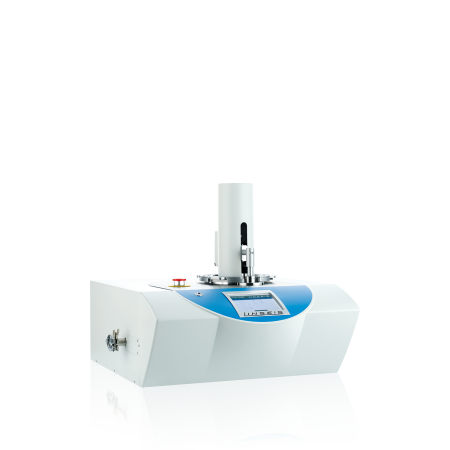
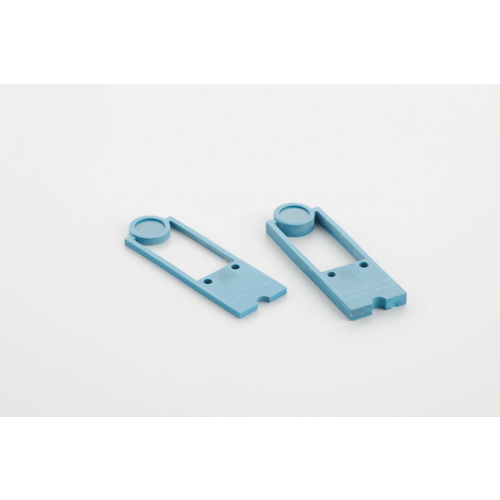
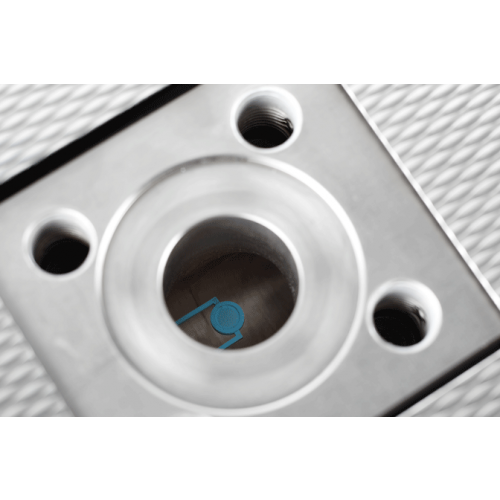
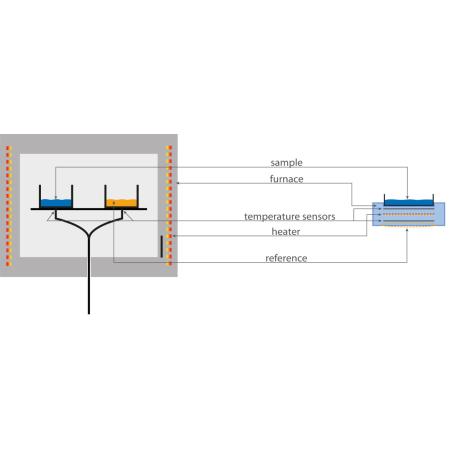
The new CHIP-DSC sensor integrates the furnace, sensor, and electronic system into a compact transparent housing. The chip incorporates both a heater and a temperature sensor, encapsulated on a chemically inert ceramic substrate. This design provides excellent temperature control, improves reproducibility and measurement stability, and supports ultra-high heating rates of up to 1000 °C/min.
The extremely low thermal mass of the chip sensor enables fast response, efficient heat transfer, and very high sensitivity. It allows easy detection of melting behavior and subtle thermal transitions. The chip can be replaced directly by the user, resulting in low operating cost and convenient maintenance. Because the chip design delivers direct and reliable raw signals, no heat-flow pre-processing or post-processing is required to complete a full DSC measurement.
Conventional DSC vs. Chip-Based DSC Technology
- Highly integrated sensor design: Heater and temperature sensor are integrated on a ceramic chip, reducing thermal resistance and increasing control speed.
- Excellent sensitivity: Ideal for detecting melting behavior and weak phase transitions.
- Ultra-low thermal mass: Enables rapid heating and cooling as well as high-throughput analysis.
- High cooling performance: Depending on the cooling system, measurements down to −150 °C are achievable.
Cooling System Options
- Peltier cooling system (0 to 600 °C): Uses thermoelectric cooling to reduce the starting temperature to 0 °C; suitable for most polymer measurements.
- Liquid nitrogen cooling system (−150 to 600 °C): Provides ultra-low temperature capability and supports all DSC function options.
- Closed-loop integrated cooler (−100 to 600 °C): Enables low-temperature measurements without liquid nitrogen consumption.
- Low-temperature cooling system (−120 to 600 °C): Uses an external liquid nitrogen reservoir to provide stable cooling performance.
Accessories and Software Support
- Wide selection of crucible materials and sizes.
- Compatible with manual, semi-automatic, or fully automatic (MFC) gas control boxes (up to four gases).
- Supports rotary and turbomolecular pump vacuum systems.
- Software provides a Chinese interface and raw data export to Excel format.
CHIP-DSC 100 Technical Specifications
| Item | Specification |
|---|---|
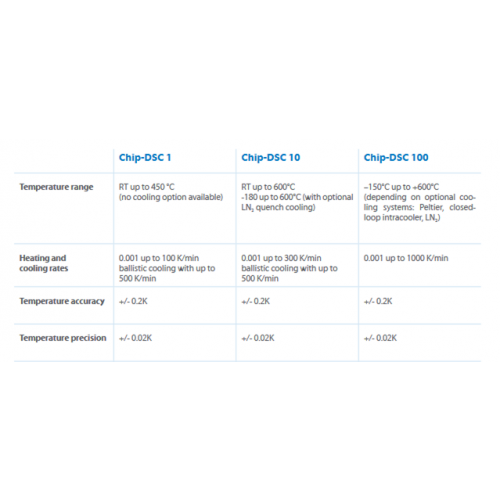
| Temperature range | −180 to 600 °C (Peltier, closed-loop, and liquid nitrogen cooling supported) |
| Heating / cooling rate | 0.001 to 1000 K/min |
| Temperature accuracy | ±0.2 K |
| Temperature precision | ±0.02 K |
| Digital resolution | 168,000 data points |
| Heat-flow resolution | 0.03 µW |
| Atmosphere | Inert, oxidative (static / dynamic) |
Application Example: PET Pellet Analysis
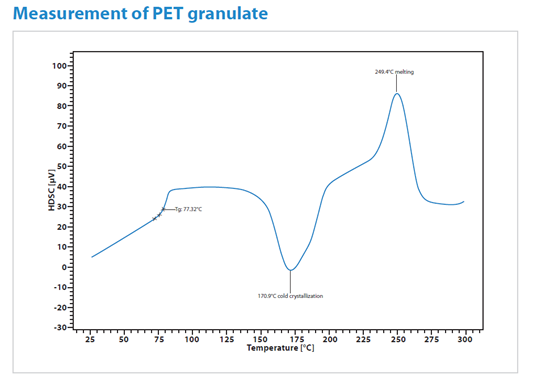
Chip-based DSC offers high sensitivity and excellent resolution for polymer applications, making it ideal for studying glass transition, crystallization behavior, and melting behavior. In this example, PET pellets were quenched to form an amorphous structure and then heated at 50 K/min. The DSC curve shows the following features:
- 77 °C: Glass transition (Tg)
- 170 °C: Cold crystallization peak
- 295 °C: Melting peak
Video Introduction
Watch the CHIP-DSC demonstration video (YouTube)