
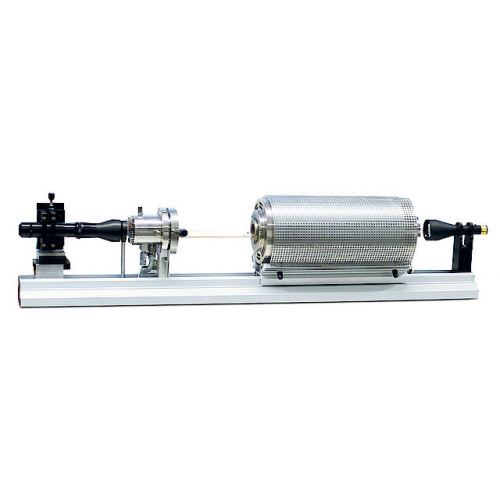
Optical Dilatometer DIL L74|Non-Contact High-Precision Thermal Expansion Measurement System
The Optical Dilatometer DIL L74 utilizes non-contact optical measurement technology and is especially suitable for materials sensitive to mechanical contact, such as glass, ceramics, and polymers. The system supports high-temperature, low-temperature, and multi-atmosphere environments, enabling the measurement of key thermal properties including the coefficient of thermal expansion (CTE), sintering behavior, deformation processes, and glass transition temperature.
By eliminating physical contact between the push rod and the sample, the non-contact design avoids measurement interference, making it ideal for brittle, soft, irregularly shaped, or molten samples that are difficult to analyze using conventional contact-type dilatometers.
Product Overview
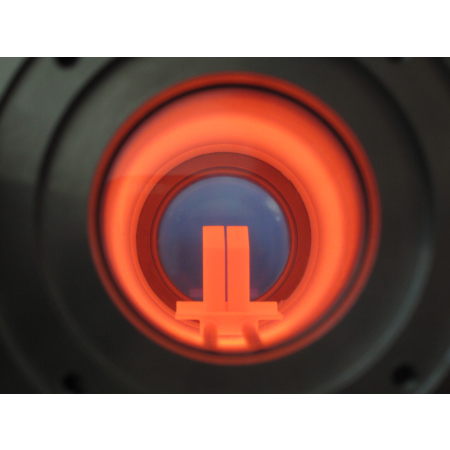
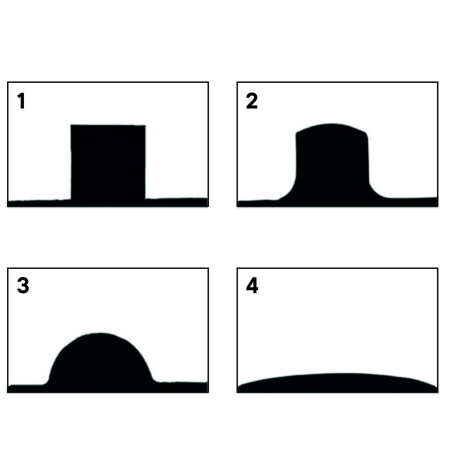
The DIL L74 Optical Dilatometer is equipped with a high-resolution optical tracking system that directly observes sample boundary movement or volumetric changes while simultaneously recording images. This design is particularly suitable for material research and academic studies requiring detailed analysis of deformation, shrinkage, and sintering behavior.
Key Features
- Non-contact measurement: Eliminates force-induced errors, ideal for fragile and soft materials.
- High-temperature capability: Temperature range from -150°C to 2000°C, suitable for glass and ceramic research.
- Multi-atmosphere operation: Compatible with inert, oxidizing, reducing, and vacuum environments.
- Real-time image recording: Enables synchronized video and image capture of sample deformation, providing both data and visual insight.
Applications
- Glass materials: Analysis of CTE, glass transition, softening point, and sintering behavior.
- Ceramic materials: Observation of sintering curves, shrinkage, and deformation processes.
- Polymers: Measurement of thermal expansion, deformation, and thermal stability.
Technical Specifications
| Item | Specification |
|---|---|
| Temperature Range | -150°C to 2000°C |
| Measurement Method | Non-contact optical boundary tracking |
| Sample Types | Solids, melts, irregularly shaped samples |
| Atmosphere Control | Inert, oxidizing, reducing, vacuum |
| Imaging Function | Real-time video recording and image capture |
Comparison: Optical Dilatometer vs. Contact-Type Dilatometer
| Item | Optical Dilatometer | Contact-Type Dilatometer |
|---|---|---|
| Measurement Method | Non-contact optical tracking | Direct push-rod contact |
| Mechanical Load | No mechanical force applied | Mechanical load may affect fragile samples |
| Suitable Samples | Soft, brittle, irregular, molten samples | Stable, solid samples |
| Resolution | High, capable of detecting subtle boundary changes | Medium to high, depending on sensor design |
| Measurable Properties | Sintering, deformation, volume shrinkage, thermal expansion | CTE, glass transition, softening point |
| Real-Time Visualization | Image and video recording available | No visual recording |
Videos
Mobile: +886-919-138-108
Email: Allen.kuo@fstintl.com.tw